

Leaderboard




Popular Content
Showing content with the highest reputation since 12/20/2025 in all areas
-
 The 50th edition of the World Junior Ice Hockey Championships concluded at Grand Casino Arena on Monday, with Sweden taking home the gold medal with a 4-2 victory over Czechia. The game capped off a remarkable 11-day tournament that featured ten teams, 29 games, and some of the world’s best hockey prospects. Czechia’s Adam Benak was among the prospects that descended upon the Twin Cities for the tournament. The diminutive dynamo has become a fan favorite in Minnesota since the Wild selected him in the 4th round of the 2025 NHL draft last summer. Benak, who was voted the Wild’s 10th-best prospect by the Hockey Wilderness staff, further bolstered his reputation as a promising prospect with a strong performance at the World Juniors, where he finished fourth in points for the silver medal-winning Czechs. He produced eight points (1 goal, 7 assists) and a +4 rating in seven games despite being 7th on the team in ice time among forwards with an average of 15:32 per game. That the 18-year-old Benak was able to produce in a tournament generally dominated by 19-year-olds speaks to both the quality of his play and his high compete level. That was further underscored by his remarkable performance in Czechia’s epic 6-4 semifinal victory over Canada, in which he scored a goal, added two assists, and was a force in all three zones. Benak’s play to set up the game-winner with 1:14 remaining in the third period provided the exclamation point for one of the tournament’s best games. Benak produced five of his eight tournament points in Czechia’s two games against Canada and was ferociously competitive throughout the semifinal. It was noticeable from his first shift until his last. The winger was all over the ice, backchecking and pursuing pucks with dogged determination. Benak creates space for himself and teammates by setting up plays with his speed, vision, deft stickhandling, and ability to transport the puck. He was one of the best skaters on the ice throughout the semifinal, showing no signs of nerves despite being one of the youngest players on one of the world’s biggest hockey stages. Beyond points, Benak had a strong tournament overall. He was a dangerous playmaker throughout, especially on the power play. He served as the primary playmaker on the second unit, usually setting up shop on the half-wall and dictating play with incursions into the slot, deceptive puck handling, and constant motion that created lanes, which he exploited with passes or quick bursts into seams. He was also dangerous on the rush, working in tandem with linemates Tomas Poletin and Maxmilian Curran to move pucks cross-seam and generate chances. He sometimes spent too much time on the perimeter, which he could get away with because Poletin and Curran have good size. However, if there’s something to criticize, that might be it. Still, Benak was a possession influencer all tournament with his puck transporting and dogged defending and backchecking, making life difficult for opponents. He thrives at creating lanes with and without the puck, manipulating space, and using his quick hands and feet to back off defenders and allowing teammates time to get to the seams he helps create. These have been hallmarks of his game at lower levels, which he also displayed at the Tom Kurvers Prospect Showcase last fall. The fact that Benak was able to translate his game to the elevated pace and physical play at the World Juniors, despite being a younger player, marked another important step in his development. Despite only tallying one goal in the tournament, he was one of Czechia’s most dangerous threats. Benak could easily have had half a dozen goals with the chances he created, but he occasionally showed his frustration as the tournament went on. While he couldn’t find the back of the net in his first five games, his approach didn’t change, except that he occasionally forced plays during games when Czechia was winning easily. When he was finally rewarded with a massive goal in the semifinals, you could see the relief wash over Benak as he celebrated the long-awaited tally, and his teammates were especially happy for him after he finally broke the ice. Benak and his teammates looked noticeably drained in the gold medal game, where they encountered a Swedish team that played a similar style to Canada; fast and physical, with skilled puck movement and heavy cycling that wears down opponents. Despite the disappointing result in the final, it was another strong showing for Czechia, which medaled for the fourth straight year and eliminated Canada for the third consecutive time. This World Juniors was just the most recent example of Benak producing in big moments on the world stage. He is the Hlinka Gretzky Cup’s all-time points leader after turning in 10- and 11-point tournaments in 2023 and 2024, respectively, while leading the Czechs to back-to-back silver medals. In last year’s Under-18 World Championship, he led Czechia in scoring despite missing a game and scored in Czechia’s quarterfinal overtime loss to Canada. What does Benak’s most recent strong showing say about his projection as an NHL prospect? It’s probably still too early to tell. Fair or not, he’ll have to continue to prove that he can be effective as he moves up levels, and it’s not easy to do that when all the other players get taller and heavier. He is intelligent, hard-working, fast, and skilled. Will that be enough to propel him to NHL success? Time will tell. In the meantime, Wild fans eager to check in on Benak can follow the OHL’s Brantford Bulldogs, where he is one of the top scorers on one of the league’s best teams. He’s also sure to be a key cog on Czechia’s 2027 World Junior squad. That event will take place in Edmonton and Red Deer, and while it’s too early to project how that tournament will go, you can bet that Adam Benak will once again be one of Czechia’s most important players.10 points
 -
I’m not overly concerned. The record is now even on the year with Colorado. We had 8 minutes of penalties that they cashed in, while we didn’t. They also scored an empty netter. It was 2-1 Colorado at even strength. Wallstadt still had a save % over .900, and the PP is a work in progress after adding a new QB. We also had 7 guys playing a back to back who have spent significant time on the shelf, while Colorado had a rest day, and had played 1 game in 4 days (this was our 3rd game since December 16th, Colorado’s second - on top of our back to back. They were much more rested). We have also been playing primarily playoff teams in much of December, while they’ve had one of the easiest schedules in the league. Lastly, you know Colorado was extra amped to make a statement after the Hughes trade. We weren’t going to win every game the rest of the year. It says absolutely nothing about the playoffs (that we already didn’t know). Were Avs fans panicking about their roster when they lost to Nashville recently? It happens. I mean, Colorado is an absolute wagon. One of the best teams ever. We’re not likely to beat them in a playoff series with or without Hughes and a new center. This game adds no further context. I did not think we would be the favorites in a playoff series before the game, and think our odds are about the same after the game.8 points
-
HAHA has this guy ever written an article with a positive outlook? Yeah we lost a few to a hungry NJ and WIN team. They needed it more than us, have a hungry team and we didn't counter properly - that's on us - we'll get better. This is NHL and it's a roller coaster - not a cruise to the end. I still stand by my call that we will beat stars in R1. We are still top3 in pts. Kap has yet to be Kap (likely due to cohesion and health). QH is still adjusting. Boldy is just starting his dominance (ascension to top 10 status). So yes - call out the last few games as duds. But to say we are tumbling like Jenga pieces is crazy.7 points
-
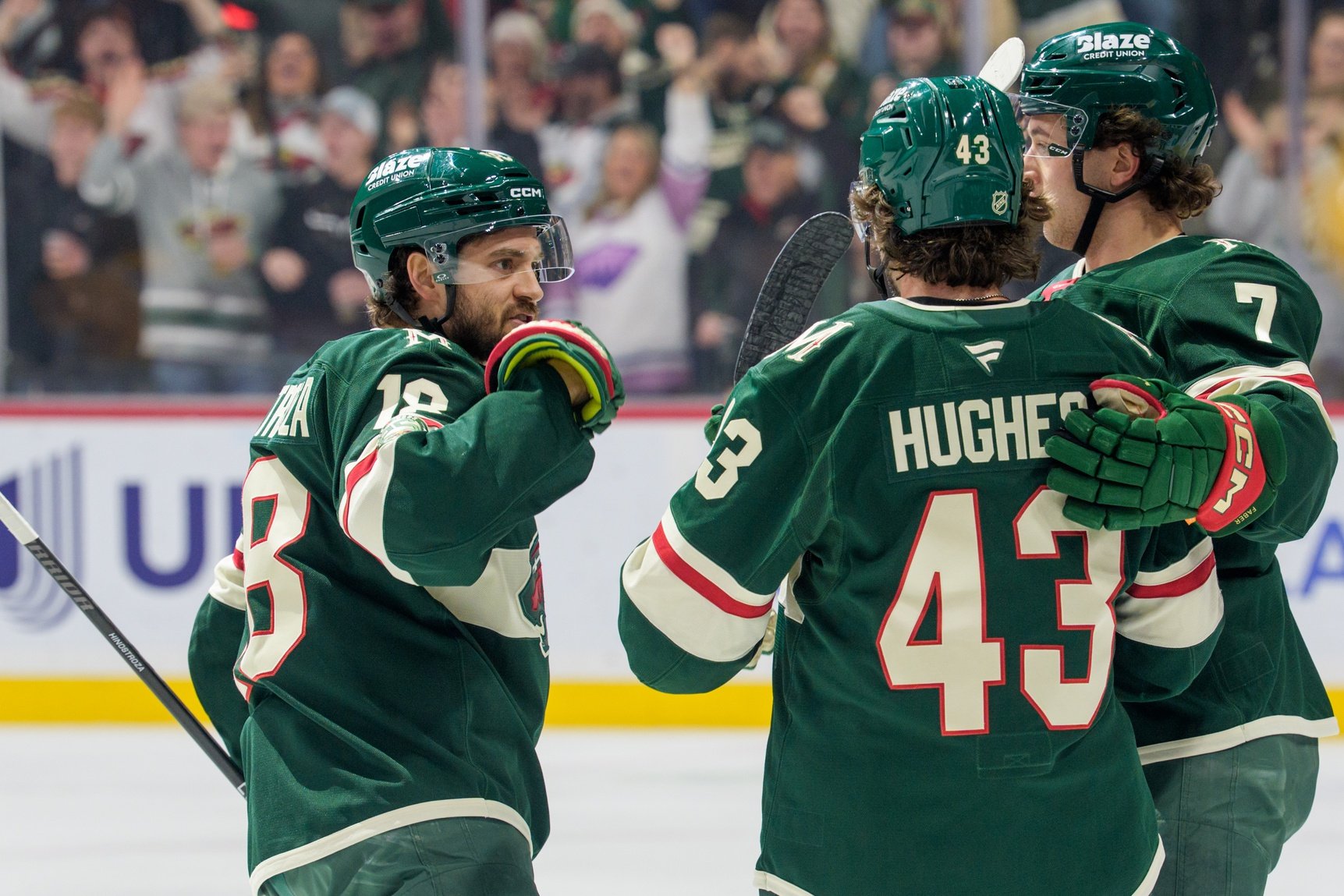 Quinn Hughes' arrival in Minnesota has been an injection of adrenaline into an already surging team. It has changed the entire team's feel. The move has signalled that the organization is done waiting around and is ready to chase something bigger right now. The Wild didn’t make a safe middle-of-the-road trade. They pushed all their chips in, sending out a package centered on Marco Rossi, Zeev Buium, Liam Ohgren, and a future first-round pick to acquire Hughes. That kind of price gets everyone's attention in the room. It tells players that management believes this group is close and willing to pay to put it over the top. Hughes arrived as a fully formed, elite No. 1 defenseman, not a project or might be good someday. He came with the resume of a star: huge minutes, power play quarterback, primary puck mover, and the kind of player other teams have to game plan around. For a franchise that has spent years trying to find that true cornerstone on the back end, it instantly raised the standard of what “good enough” looks like. From his first game in a Wild sweater, Hughes looked like he belonged. He scored in his debut and immediately started driving play from the back end, turning routine breakouts into controlled rushes and giving Minnesota a different gear in transition. The points came in short order, with Hughes adding to a season total of 30 points in 33 games and continuing to produce at roughly the same rate he had in Vancouver. The way he creates his production makes it so valuable. Hughes doesn’t rely on hopeful point shots; he walks the blue line, pulling forecheckers out of position, and threads passes through seams that open up only because of his patience and edge work. That ability to hold the puck and wait for the right lane has turned basic offensive zone time into real pressure, forcing penalty kills and five-on-five units to stretch and respect the threat at the top of the zone. Then there’s the workload. Hughes regularly pushes close to 29 minutes a night and has already gone past 32 minutes in a non-overtime game, essentially becoming the Wild’s metronome. When the game is getting away, he’s on the ice to settle things down. When they need a push, he's out there starting the play. Late in tight games, he’s the one taking those crucial shifts, touching the puck, and dictating tempo. The Hughes trade hit at the perfect time for a team that was already starting to heat up. Minnesota had been rolling since early November, and Hughes stepped straight into that stretch and made it look even more convincing. Minnesota kept stacking wins in the immediate aftermath of the deal, including a statement performance over Boston, and outscored opponents 16-4 in the first three games with him in the lineup. That kind of goal differential doesn’t happen by accident. You can see his fingerprints all over how the Wild manages games now. Breakouts are cleaner, with fewer blind chips off the glass and fewer panic plays under pressure. Forwards are getting the puck in stride, which leads to more controlled entries and longer spells in the offensive zone. All of that adds up to less time chasing, less time stuck in their own end, and more stretches where the Wild are dictating the pace instead of reacting to it. Defensively, Hughes has done as much to stabilize the team as he has to spark its offense. By handling the toughest matchups and the heaviest minutes, he lets the rest of the defense slide into roles that fit them better. The Wild aren’t asking second-pair guys to play like shutdown No. 1s anymore, and depth defenseman can focus on simpler, more defined responsibilities instead of being overextended. The overall look of the Wild’s back end has changed because of that shift. There’s less scrambling, fewer extended shifts where everyone is pinned and chasing, and more sequences where Minnesota kills plays early and flips them into possession going the other way. When Hughes is on the ice, the team plays with a calm, connected posture that has been missing in earlier stretches of the season. Off the ice, Hughes has brought a different kind of presence to the Wild’s locker room. He doesn’t need to be the loudest guy in the room. His confidence shows up in how he prepares, how steady he looks in big moments, and how comfortable he is carrying the weight of expectations. When your top defenseman never looks rattled, it has a way of settling everyone else down as well. That influence is easy to miss on TV but impossible to ignore around the team. A quick word on the bench after a tough shift, a nudge of encouragement to a younger defenseman, the quiet “give me the puck” body language late in periods, those moments add up. Younger players get a live example every night of what it takes to be one of the best at the position, and veterans gain a partner who shares the burden of driving the team forward. Taken together, the Hughes trade feels like a turning point for the franchise. For years, the Wild have been good, sometimes very good, but often stuck in that middle tier where they were hard to play against without truly scaring the league's elite. Now with a star on the back end to go with their core up front, the roster finally looks like the front office built it with a deep spring run in mind. People will debate the cost in prospects for a long time, but in the short term, the wins, the goal differential, and the way this team now carries itself suggest it was the kind of bold move that can redefine an era in Minnesota.7 points
 -
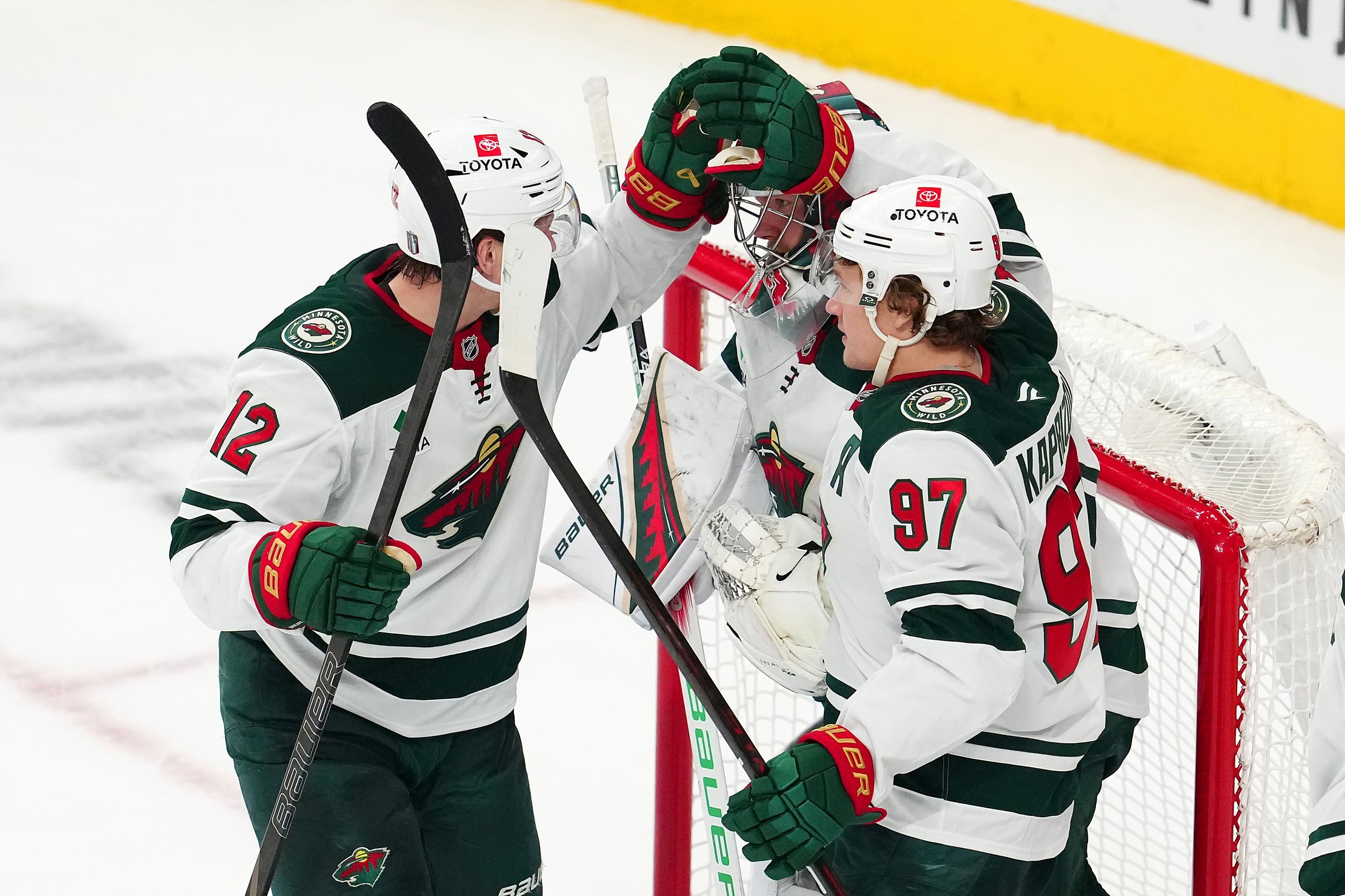 Back in October, Bill Guerin posed a simple question about Matt Boldy to The Athletic's Joe Smith: "You tell me. What wingers are better than him?" At the time, the list wasn't very long. The Minnesota Wild's "second star" was already in the top-20 wingers, according to NHL Network. Jack Fresher, or JFresh, of Elite Prospects ranked him 17th in the league, ahead of bona fide high-end players like Kyle Connor, Brady Tkachuk, and Filip Forsberg. The Athletic's Player Tiers was even higher on him, placing Boldy ahead of all but nine wingers. Obviously, it's a subjective question, and 10 different people might have produced 10 different lists when asked that question before the season started. Still, no matter who created the list or who was on it, it's a virtual guarantee that there would be a lot fewer names on it today. We're approaching Game 40 of the season, and it's impossible to dismiss Boldy's tear to start the year as a hot streak. On Saturday night -- Game 39 for Boldy and the Wild -- Boldy claimed the team lead in goals with his 23rd and 24th of the season, and is up to 45 points on the season. The 24-year-old has enjoyed hot starts before, but would often hit a slump that would derail a true breakout season. If that slump is coming, we haven't seen it yet. Matt Boldy, Time To Reach 45 Points By Season: 2022-23: 67 games 2023-24: 50 games 2024-25: 50 games 2025-26: 39 games At this point, it'll be shocking if this doesn't go down as the year Boldy finally takes "The Leap." Boldy is currently on pace for 50 goals -- a would-be Wild record -- and 95 points. His upside has taken an upturn in the past two weeks, even with Quinn Hughes joining the team. The All-World defenseman has assisted on Boldy's past three goals, after all. We've seen Boldy go on tears before, but he's never sustained something quite this good, this long. Maybe it's an awkward data point to not wait until Game 40, but this is Boldy's best 39-game stretch in any season by a wide margin. That's impressive, but not nearly as impressive as matching Kirill Kaprizov's output almost perfectly. Boldy's 24 goals are one ahead, and his 45 points are one behind the Wild's $17 million man. That's no criticism of Kaprizov, who comes into Monday tied with Jason Robertson for fifth in the NHL with goals, and eighth in the league in points. Instead, it's a testament to just how high Boldy's stock is rising, keeping up with a player who was an MVP favorite at this time last season. Usually, when you see these kinds of results from a "second star," you can credit the "Batman" for elevating "Robin's" numbers. Kaprizov and Boldy make for a lethal battery on the power play, but Boldy has thrived away as the primary driver of his own line at 5-on-5. Boldy has spent just 36.5% of his 5-on-5 minutes with Kaprizov, and when Boldy has been on a line with Joel Eriksson Ek and Marcus Johansson, the Wild have out-scored opponents 12-2. Recency bias can overwhelm us, but it's still probably a bridge too far to suggest Boldy has leapt over Kaprizov. Kaprizov can run off a stretch where he scores nearly a goal per game for two months. It's telling that we're treating Boldy's production as a major revelation, while Kaprizov's nearly-identical numbers feel ordinary for him. But there's no doubt Boldy is closing the gap. The question is: How much? All three of the lists we mentioned earlier were solid on their top-three wingers, in some order: Kaprizov, Nikita Kucherov, and David Pastrnak. If we average out their placings on each list, the top-15 breaks down as such (tiebreaker goes to the highest rank on any list): Nikita Kucherov (Avg Rank: 1.00) David Pastrnak (2.33) KIRILL KAPRIZOV (2.67) Mikko Rantanen (5.00) Mitch Marner (5.33) Matthew Tkachuk (6.00) Artemi Panarin (7.33) William Nylander (7.33) Sam Reinhart (8.00) Jake Guentzel (11.33) Brendon Hagel (11.67) Jason Robertson (13.67) Jesper Bratt (13.67) Kyle Connor (14.67) MATT BOLDY (15.33) Boldy started the year at the very fringes of the top-15. Let's see how our 15 heroes have fared in terms of points per game (tiebreaker goes to goals): Kucherov, 1.44 Rantanen, 1.42 Connor, 1.25 Nylander, 1.24 Pastrnak, 1.21 KAPRIZOV, 1.18 Robertson, 1.18 BOLDY, 1.13 Marner, 1.08 Reinhart, 1.05 Guentzel, 1.03 Panarin, 0.97 Hagel, 0.94 Bratt, 0.81 Tkachuk, DNP Of course, we know that points are a big part of a forward's value, but it's not the end-all, be-all. Defense comes into play, and the ability to draw power plays without going to the penalty box matters a ton. So, let's take a look at how these players stack up through the lens of Evolving-Hockey's Standings Points Above Replacement, which tries to measure all-around value into an easy-to-digest number. Marner, 4.3 SPAR Robertson, 3.3 BOLDY, 3.2 Guentzel, 3.2 Connor, 2.7 Panarin, 2.7 Hagel, 2.4 Rantanen, 2.4 KAPRIZOV, 2.3 Nylander, 2.1 Bratt, 1.9 Kucherov, 1.8 Pastrnak, 1.6 Reinhart, 1.3 Tkachuk, DNP It's pretty indisputable that Boldy has moved past Bratt, Hagel, Panarin, and Reinhart. That puts him on the fringes of the top-10, automatically. We can also firmly keep Kucherov, Pastrnak, and Kaprizov in the top-3, given their reputation and production. Robertson's edged out Boldy in points and SPAR, so that also limits Boldy's ceiling to fifth. Make it sixth, giving Matty Tkachuk some deference for wherever he comes back. Now it gets interesting: Where does he land in the 6-to-11 range? Ultimately, it comes down to personal preference, but we're talking about some fascinating debates. To recap, this group comes down to, in alphabetical order: Boldy Connor Guentzel Marner Nylander Rantanen Your mileage may vary, but here's one opinion as to where these shake out: 1) Marner -- It's hard to discount either of these two things: His impact with the Vegas Golden Knights, and the fact that the Toronto Maple Leafs have completely fallen apart without him. He feels like an MVP candidate this year. 2) Rantanen -- He's putting up elite numbers on his second team, and with the Dallas Stars, he's arguably the best player on a contender. (small gap) 3) Boldy -- Homer pick? Maybe, maybe, but Boldy's contributions on both sides of the puck can't be ignored. His shorthanded chops have been a great development, and he's always been a low-key elite shutdown forward, especially with Eriksson Ek beside him. If his scoring is equivalent to this tier, the rest of his game makes a difference here. (small gap) 4) Guentzel -- Another player who puts up great numbers wherever he goes. He's 31, but not yet on the downswing of his career, and his passable defense elevates him over the rest in this mini-tier. 5) Connor -- Yes, defense matters, but so does scoring goals, and few do it better than Connor. Dude's averaged 40 goals per 82 games in the 2020s, gotta give him some props for it. 6) Nylander -- Great production, coming off three-straight 40-goal campaigns. But someone's gotta be here, and his defense has graded worse than Connor for this season and last. Again, your mileage may vary, and people who've watched other players for 82 games may well bring a different and valid perspective to the table. But it's hard to put Boldy outside the top-10 wingers right now, and that's a pretty remarkable development for the Wild. Boldy's not just showing himself to be a "second star" forward in Minnesota, but he's pushing to be a legitimate 1B to Kaprizov's 1A. If we're still having this conversation by Game 82, it will go a long way to helping the Wild's playoff chances.7 points
 -
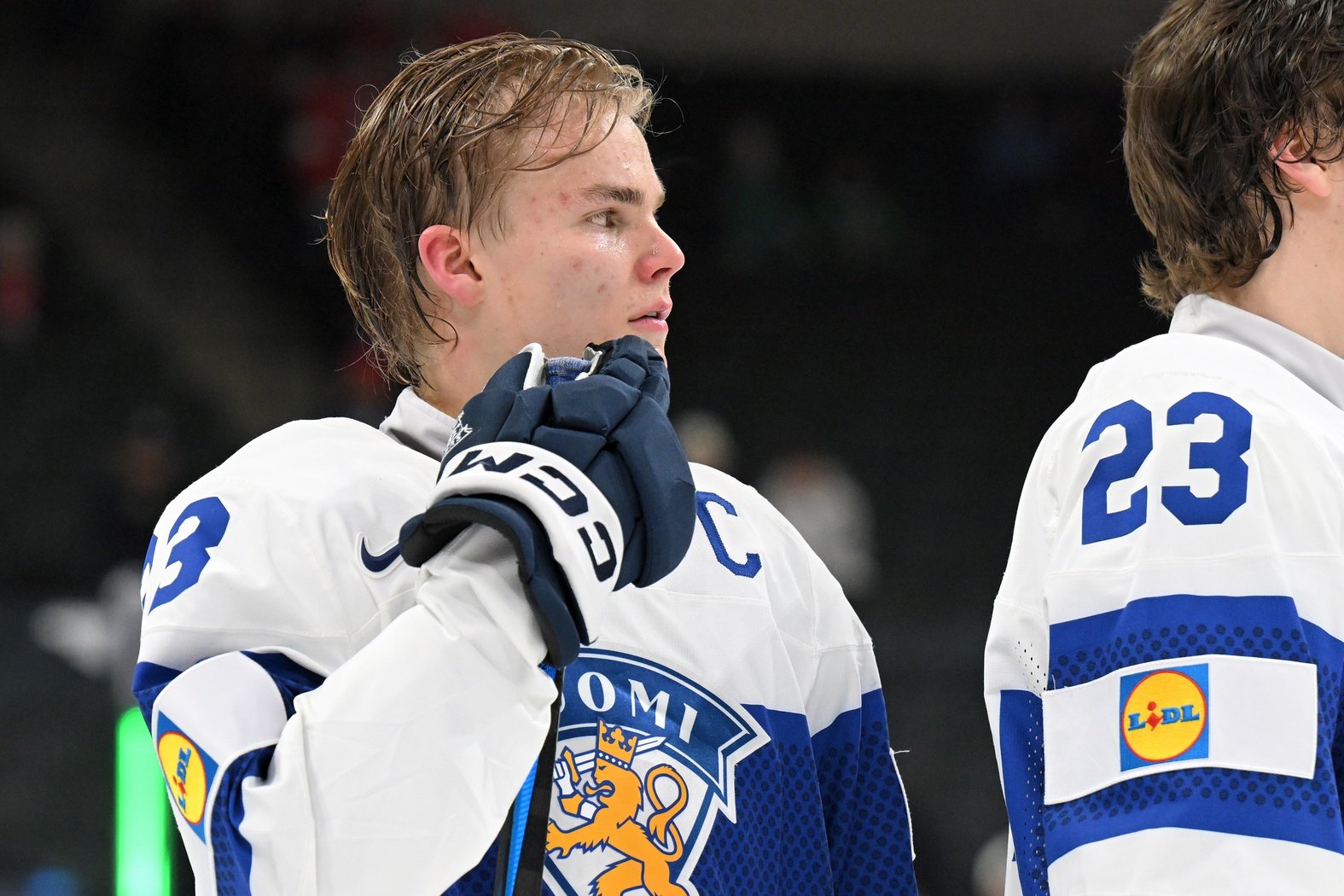 Aron Kiviharju, a 2024 fourth-round draft pick of the Minnesota Wild, was in the Twin Cities for the past few weeks as he captained Team Finland to a third consecutive appearance in the medal round. It was Kiviharju’s second year as captain of the Finnish squad. While they were disappointed with their fourth-place finish after falling to Canada in the bronze medal game, it was another excellent performance by the 5-foot-10 defenseman. He was once again voted as one of Finland’s three best players after also receiving that honor in last year’s tournament. Kiviharju, who famously told Bill Guerin that the Wild “got the steal of the draft” after a serious knee injury in his draft year caused him to slide down draft boards, led Finland in ice time with 23:03 per game, which was also the fifth most by any player in the tournament. He was the most important player on a team lacking star power, which became crystal clear when he missed Finland’s preliminary round matchup against Canada. In the six games that Kiviharju played, Finland allowed an average of 2.83 goals against. In that New Year’s Eve tilt versus Canada, they allowed seven. It wasn’t just that the usually stout Finns got lit up; it was how it happened that was the most striking. All night, they looked disorganized on the back end, mixing up coverages, missing switches, and botching sort-outs when defending in transition. They were pushed around in front of the net, and several of Canada’s goals came on defensive breakdowns. Zone clears under pressure were an issue. There was even a five- or ten-second window at the tail end of a power play when they played with only four skaters after a mix-up that left them one defenseman short. It was clear from the get-go that they dearly missed their captain. Watching Kiviharju defend is like watching a good floor general in basketball. He directs traffic, calls out switches, supports teammates, and takes away options. Kiviharju is versatile. He can play both sides and often does, meaning the lefty can be mixed and matched with partners based on game situations and matchup preferences. And when he gets the puck on his stick, the game calms down, and he handles it with poise. Kiviharju rarely makes a bad decision, and he’s excellent at relieving pressure with deft maneuvers into space or short passes against the grain that evade forechecks. Perhaps most importantly, he plays big minutes. In Finland’s epic semi-final game against eventual gold-medalist Sweden, a thriller that ended in a 4-3 shootout decision for the Swedes, Kiviharju played a whopping 27:28, including 5:08 of the 10-minute three-on-three overtime. His ice time was nearly seven minutes more than the next highest total for a Finnish defenseman. Kiviharju was on the ice for all three of Finland’s goals and only one goal against. He assisted on Finland’s first goal and nearly ended the game in overtime, ringing the crossbar from the high slot. It was a phenomenal performance in the biggest of moments. It came two days after overcoming illness and playing a stellar game in a quarterfinal victory over the United States, in which he made a beautiful back-door pass to set up Finland’s second goal. It’s starting to become clear that Kiviharju will have the chops to succeed in North America once he makes the jump. He’s signed with HIFK in Liiga (Finland’s top league) through the 2026-27 season, so it’s likely that the earliest the Wild could sign him would be for the 2027-28 season. The question is, what is his ceiling? And does that ceiling include the NHL? Offensively, he should be suitably effective at any level. He is an excellent puck handler, and while he’s not flashy, he has subtle skill, making many good, efficient, and quick puck handles that he combines with excellent footwork. That allows him to stay square to the play to survey for options and find lanes, makes it difficult for defenders to anticipate his movements and buys him a little extra time and space. As a puck mover, he makes good reads and understands motion and play development in terms of when and where to find or create options in all three zones. I’ve noticed an improvement in his shot over the last year. He doesn’t have a powerful shot or the quickest release, but he’s improved in both areas, and he’s always been good at getting pucks through and shooting for tips or rebounds. He’ll never be a big point producer, but he can be an asset for an offensive unit. He runs a good power play at the junior level, but I don’t know if he projects to do that at the NHL level, because most teams will have better options. I could see him running an AHL power play unit. He currently looks to be getting power play time on HIFK’s second unit, but that power play has only produced at 17.14% success rate, though four of Kiviharju’s seven points on the season have come with the man advantage. Defensively, from a foundational standpoint, he has a lot of the tools that could help him succeed long-term. He overcomes his smaller stature in many situations with footwork and a solid base. He’ll get in on an opponent’s hands to take away their stick in front of the net, but he doesn’t lock up too early and get outmuscled by bigger players; he tries to time it so that he has the advantage when his man becomes an option, or when the puck arrives. Kiviharju uses a similar tactic in wall battles. If he gets there first, he’ll win nearly every time because of his footwork and leverage. However, if he doesn’t, he tries to stay in tight and disrupt an opponent’s ability to use his stick to make a play. Then, he’ll look for opportunities to poke the puck loose or lock his man up until he gets support. For Kiviharju, the question will always come down to his skating and whether he can continue to adapt as he moves up the levels. He’s not a fast skater and cannot generate quick bursts. That occasionally causes him issues, especially when he has to track speedy opponents around the offensive zone and win races to spots. In these instances, he tries to use his intelligence, reading, and footwork to anticipate and disrupt movements, get into passing lanes, and thwart plays that way. But if he gets caught on a guy’s hip or is at a positional disadvantage, opponents can occasionally exploit that. When Kiviharju is defending the rush, if he gets caught flat-footed or with bad gaps, he has a hard time recovering because he’s not the swiftest backward skater and doesn’t make powerful turns from backward to forward. Kiviharju has largely eliminated the risky poke checks and reaches he was making last year at this time. He also moves well laterally with strong pushes and pull-unders, so if he can keep position, he can defend against faster players. If I had to bet right now, I’d guess that Kiviharju eventually becomes an NHL defenseman, but probably a bottom-of-the-lineup one that can play steady but unspectacular minutes. First, he’ll need to prove he can handle the heaviness and physical rigors of North American hockey on a daily basis, and the AHL will allow him to do so. If he succeeds there, I think he’ll transition to the NHL rather easily once he makes the jump. With players like Kiviharju, who are well-rounded and have some tools but look like fringe players on the surface, I look at intelligence, competitiveness, and the ability to stay composed. Those tend to be the separators among prospects who profile similarly, and Kiviharju has each in abundance. He’s a mature player and a leader, and he’s played on some of the biggest hockey stages in the world and thrived. Whether Kiviharju becomes the steal of the 2024 draft remains to be seen, but he looks more and more like a valuable future piece of the Wild organization.6 points
 -
It's a bit confusing to argue that 76% PK is bad, but also suggest that a 25.9% PP conversion rate is bad--that power play effectiveness would be top 5 for the season. 76% PK is bad, so the inverse conversion rate for PP should be good. Since November 1st, the Wild PK is at 82.3%, which is the 12th best rate in the league. The Wild PP has actually dipped to 19.2%, which is middle of the pack at 16th out of 32 teams when excluding October. Obviously, the Wild would like be be above average on the Power Play, but they have already climbed out of the bottom 10 on penalty kills if you exclude the poor October start. They could always be better, but they might not be below average now.6 points
-
Aron Kiviharju was Finland's captain for the second straight year. I have articles on him and potential late round draft picks queued up - stay tuned. One spoiler: Czechia's Tomas Galvas is a name to keep an eye on.6 points
-
"The Stars are the only other team getting this sort of break in February. They have a similar advantage because Jason Robertson was snubbed from Team USA" I would not be shocked if he ends up replacing an injured player on the US team.6 points
-
He has changed a lot and the scoring is definitely up. I would like to see his pairing ending up with Kap's line more. I was at the game in Vegas and his line was totally shut down all night but every time I looked to see who they were on the ice with I would see Bogo or Mids. The puck just moves so effortlessly most of the time when he and Faber get control of the puck and offensive zone entries are no longer a struggle. For anyone wanting to see a road game, and I am not a gambler, Vegas was really fun and you should consider it. Their arena is great and in the center of everything on the strip, plenty to do while you are there. And probably 5% of the people in attendance were Wild fans. Many organized a post game party at a bar after the game (we did not attend.) A goal 15 seconds into the first period shut the crowd up and it was a MN Wild party from the jump. We placed bets on the Wild winning and scoring first and cashed both. Cha ching! Thanks Nojo! I....um.....never had a bad word to say about you!6 points
-
I’m forgetting everything about this team from the past and going full New Year and evaluating from here to season’s end.6 points
-
Do we just stop playing hockey because Avs are amazing? Should the whole league just forfeit the year and give them the trophy? Maybe look at what winning a president trophy did for Tampa or Winnipeg or Boston (Two of those teams set point records too - didn't help in the POs) Playoffs are different beast. There would (hopefully) not be similar bs calls and QH will integrate into our O and D structure much better. There is also still potential to add a vet to help with top 9 scoring. So why can they not highlight a 3-2 win? They did not have Rossi then. They had raw rookie (Zeev) and now have QH replacing him. Yes, Makar is a better D, but Makar is on his own level - but the next D up is QH. You say that before they couldn't score, but now they do....so isn't that a good thing? Their D is just coming back together after injuries - so it may take a bit more time to gel. The conclusion is that they might be one of the only teams (Dallas) that can match up with Avs. Yet here you are again - Still, as currently constructed, they’d lose to the Avalanche if they met in the playoffs. again since Avs are that good - is your suggestion to punt the season? to trade away Kap, Hughes and Boldy and go into a rebuild? to admit trading Rossi was a mistake? Or trading Zeev was or Ohgren? what is the conclusion? seems like you are set to give Wild an F no matter what.6 points
-
Nice win. This version of the Wild is certainly fun to watch!!!!6 points
-
Unselfish play. All class6 points
-
Baldy making his case to go from star to superstar status6 points
-
Yuck. Kadri is a slight upgrade over Hartman. If we had him on a Marcus Johansson league minimum deal...sure. But I wouldn't give up an old puck bag for him in a trade.5 points
-
Really great piece, Tony. Hughes has been a great addition. My concern since his arrival has been with Kaprizov's adjustment, or lack of adjustment. When QH is on the ice with KK, Kirill doesn't need to be the primary puck mover like he has in the past. He should be looking for soft spots and seams and scoring in droves. Secondly, the Wild would be better served replacing Zuccarello with Faber on the top PP unit. Hughes can be a better Hughes if he has a responsible D-man covering. Just my two cents.5 points
-
 The Minnesota Wild have played 11 games with Quinn Hughes in the lineup, and they have to be loving what they see. The team has used the boost to go 7-1-3 in that span, which has allowed them to draw even with the Dallas Stars in the Central Division standings. They may be 11 points behind the superhuman-looking Colorado Avalanche, but they're also a commanding 15 points above the playoff bubble. Minnesota's record says "Contenders," and with Hughes in tow, they're looking the part. Their goal differential is currently plus-23, up from plus-17 since Hughes' arrival. The Wild are tied with the Avs as the top team in the NHL over that time. The team's resume also looks decent, having nuked the Boston Bruins, Washington Capitals, and Edmonton Oilers, taken a rare road win against the Winnipeg Jets, and steamrolled the Vegas Golden Knights in Vegas. But what have we actually learned, given it's such a small sample size? Quite a lot, actually. We'll start here: Yeah, Hughes Is THAT GUY. When the Wild traded for Hughes, there was some sticker shock from the fanbase. It was easy to fall in love with a future team that would ice Zeev Buium as a superstar, and Marco Rossi and Liam Öhgren as valuable supporting pieces. Was Hughes really enough of a difference maker to punt on Buium's potential and weaken the Wild's center depth? Sure seems that way. It feels silly to say "The defenseman with 12 points in 11 games is great," but Wild fans really don't have a frame of reference for just how good he really is. We've said it before in this space, but think of all the great Wild defensemen we've seen. A future Hall of Famer like Brent Burns, a borderline guy like Ryan Suter, Jared Spurgeon, Matt Dumba, the list goes on. The Wild's record for single-season points by a defenseman is 51, a number Ryan Suter reached twice. Quinn Hughes is on track to set the franchise record with 55 points... and he can only play 50 games in a Wild sweater. Everything about this guy is different. He moves differently than any Wild defenseman -- maybe Wild player -- we've ever seen. Hughes thinks the game at a high level and is always prodding for holes in the defensive structure. Because of this... The Wild Have Picked Up the Pace Minnesota's story, at least on the offensive side of the puck, looked familiar until December 13. They weren't great at generating scoring chances, and goals were hard to come by. Minnesota ranked just 15th in the NHL with 2.66 expected goals per hour at 5-on-5, ranking in the bottom half of the league in shots and shot attempts. Throw in some underperforming shooting, and the Wild sat at 28th in 5-on-5 offense, with just 2.07 goals per hour. Enter Hughes, and suddenly, the entire team is faster. Minnesota Wild at 5-on-5, Since Hughes Trade: Goals per hour: 3.35 (sixth in NHL) Shots per hour: 28.3 (sixth) Shot attempts per hour: 62.5 (fourth) Expected Goals Per Hour: 3.09 (seventh) Teams can go on hot streaks, of course, especially when they get that New Trade Smell. But this is more than a blip of scoring out of nowhere. The Wild are backing it up by ratcheting up the pressure on opposing goalies. They're a top-six team in virtually all offensive categories since the Hughes trade. Even more remarkably, this is despite leading in over 47% of their 5-on-5 and trailing only around 21% of the time. Teams that are tied or behind are going to press to score, but even with the incentive to hang back, the Wild are still flooring the gas pedal and easily dominating play. The Stars and Avalanche Should Be Scared Look, we're talking about Minnesota sports. We get it. It's very Minnesota Sports to have a dominant, top-three team in the NHL, only to have to face the second-best team in the first round, then the absolute best team in the second round. You can get fatalistic, if that's what you really want. Or perhaps you can take comfort in knowing that Colorado or Dallas would much, much prefer facing some chump Pacific Division team early in the playoffs than having to face the Wild in those first two rounds. Nobody wants to face Hughes, Kirill Kaprizov, and Matt Boldy. No team wants their superstars going against a Hughes/Brock Faber pairing that has been dominating for Minnesota. And a team that looks as great as the Wild has with Hughes isn't just a tough out. They're a team that can stack up to what Colorado and Dallas can bring to the table. Just look at their 5-on-5 stats since December 13. Goals For %, 5-on-5: Avalanche: 68.4% (first in NHL) Wild: 62.5% (third) Stars: 56.9% (sixth) Expected Goals For%, 5-on-5: Avalanche: 56.4% (second) Wild: 55.9% (third) Stars: 51.0% (13th) There aren't any guarantees in the playoffs -- you can ask the Avalanche, who lost in seven games to the Stars in a first-round series. But the Wild have the makings of a team that can go on a deep, deep playoff run. You might be dreading that tough road to the Western Conference Final, but for the Wild, this could easily be a "You're locked in here with ME"-type of situation.5 points
 -
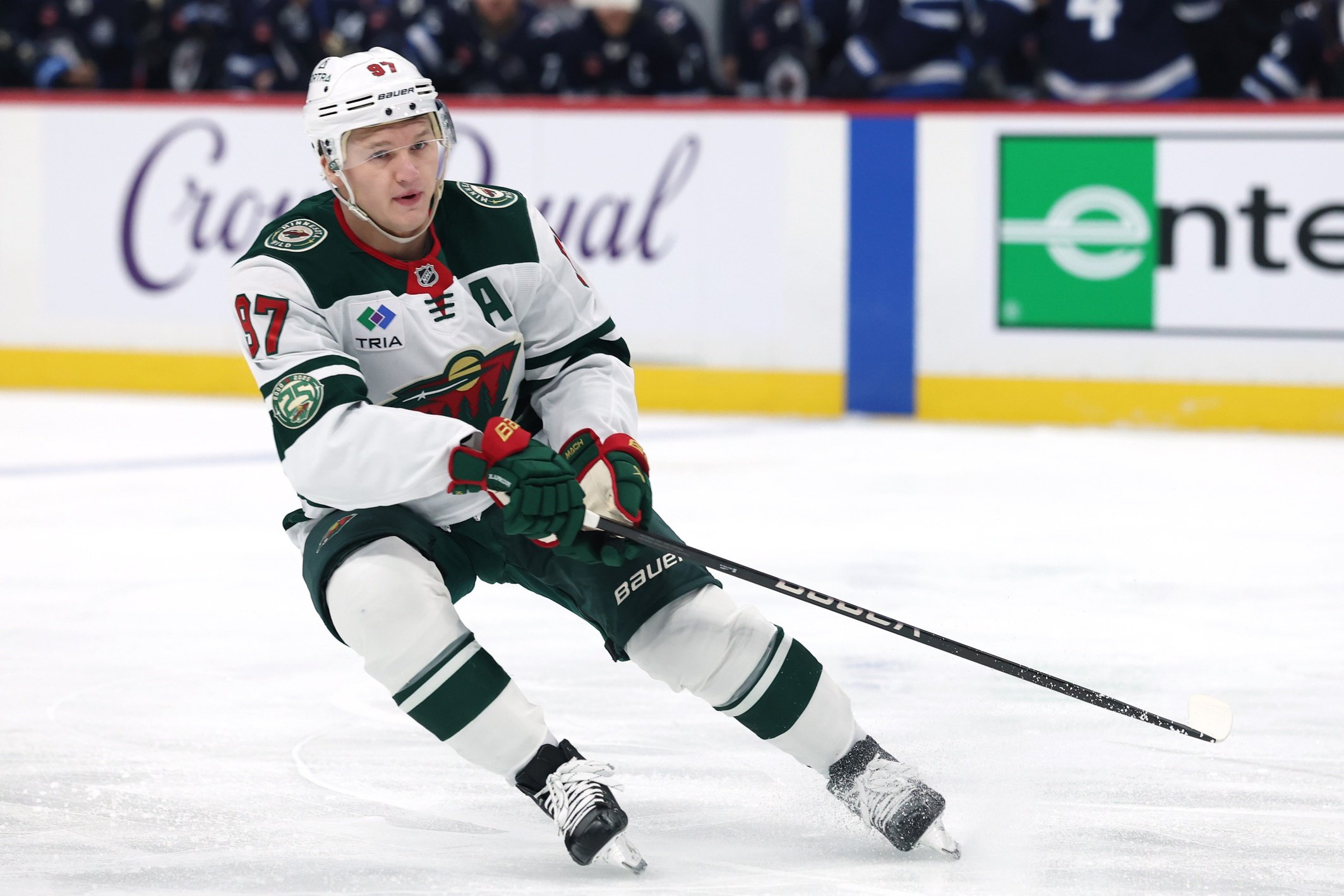 As the calendar flips to 2026, the hockey world is eagerly awaiting the rosters for next month's Olympic Games. While fans in Minnesota are getting a taste of international hockey with the World Juniors, that's nothing compared to what's on deck. With the NHL finally back in the Games after a 12-year absence, we get to see the best of the best compete for the highest stakes. Or at least, most of the best of the best. Since 2022, the IIHF has banned Russia and Belarus from international play over the war in Ukraine. That ban means superstars like Alex Ovechkin, Evgeni Malkin, and Aliaksei Protas won't participate in the Milan-Cortina Games. Without weighing in too heavily on geopolitical affairs, it's kind of a bummer that a historical hockey powerhouse like Russia is on the outside looking in for this tournament. It's not like Nikita Kucherov is driving a tank into Kyiv, you know? Of course, that affects Kirill Kaprizov, the Minnesota Wild's first superstar. Watching him take the ice with Ovechkin, getting pucks fed to him from all-time playmakers like Malkin, Kucherov, and Artemi Panarin would be something to behold. No offense to Zach Parise and Ryan Suter back in 2014, but Wild fans haven't gotten to see players as great as Kaprizov represent the franchise on the international stage. Or at least, not until Quinn Hughes takes the ice for Team USA. Instead, Kaprizov gets three weeks in February to rest up and do whatever he wants. Maybe he'll take the opportunity to go home. Perhaps he'll put his feet up, recover from the first half of the season, and get to 100%. Heck, he could take some time to do some light tampering, campaigning for someone like Evgeni Malkin to come to St. Paul for a playoff run. Just kidding! Ha ha! (Please do this.) Jokes are fun! Kaprizov won't get to play for (another) gold medal, and it'd be surprising if that fact isn't eating away at him. Weirdly enough, though, this might be the best thing for him and the Wild. Three weeks of recovery time are a godsend, and it's one that's not being afforded to most other superstars in the league. The NHL's condensed schedule, in place to accommodate the three-week Olympic break, has been a gauntlet for teams. Injuries appear to be up, which makes sense given the reduced recovery time. Wild fans saw their team play eight games in 13 days in mid-December, and those kinds of stretches have been the status quo for most teams. Practices are all but a thing of the past, with teams looking for any time to get rest. An 82-game season was already grueling before the condensed schedule came into play. Now add the extra grind of five or six extra games -- games in a playoff-like environment -- for many of the NHL's best players. Suddenly, the Wild have an opportunity with Kaprizov. Looking at the Western Conference's five main contenders, we can see that almost all of their superstars are almost guaranteed to take on that extra workload. We can see that the Wild are about to be hit fairly hard by it, as well. Colorado Avalanche: Nathan MacKinnon, Cale Makar, Devon Toews (CAN), Martin Nečas (CZE) Dallas Stars: Thomas Harley (CAN), Miro Heiskanen, Roope Hintz, Mikko Rantanen (FIN), Jake Oettinger (USA) Edmonton Oilers: Connor McDavid (CAN), Leon Draisaitl (GER) Minnesota Wild: Joel Eriksson Ek, Filip Gustavsson (SWE), Matt Boldy, Brock Faber, Quinn Hughes (USA) Vegas Golden Knights: Mitch Marner, Mark Stone, Shea Theodore (CAN), Tomáš Hertl (CZE), Jack Eichel, Noah Hanifin (USA) That's not surprising: The best players get to go to the Olympics, and the best teams have a wealth of great players. But the opportunity for the Wild exists in the star players who aren't going to the Olympics. At least in the West, it's not a long list. Most of the superstar Russians getting a break -- the Kucherovs, Panarins, Andrei Svechnikovs, and Igor Shesterkins of the world -- are in the Eastern Conference. No offense to Valeri Nichushkin or Pavel Dorofeyev, but three extra weeks of rest for them aren't going to turn them into a game-changing force. For an all-world talent like Kaprizov, a small edge pushing his game up another notch could spark an MVP-type run. Despite having 23 goals and 47 points this year (a 46-goal, 94-point pace), we haven't seen Kaprizov at his best. One really only needs to look to last season to confirm it, as Kaprizov had 25 goals and 56 points in 41 games. The superstar has been in the lineup for every game, but is he truly recovered from the lower-body injuries that plagued him last year? As well as he's played, Wild fans have had to wonder about lingering effects. If that's the case, then the three weeks of rest are a massive boon for him. Especially since Kaprizov's powers usually seem to grow as the season goes on. As the playoffs draw near, Kaprizov turns on the burners when it comes crashing the net and getting goals. Just look at what he accomplishes in (roughly) the second half of the season. 82-Game Scoring Pace, Kirill Kaprizov, Career: October to January: 42 goals, 99 points February and Beyond: 55 goals, 97 points Maybe his overall production doesn't increase, but goals are more valuable than assists. When teams are getting desperate, making their final pushes for the playoffs, Kaprizov is still able to get on the board and arguably shines brighter in those games than in the early part of the year. Combine this with getting to stand still while MacKinnon, Makar, McDavid, Draisaitl, Rantanen, Heiskanen, Eichel, Marner, and Stone are going to be traveling across the world to get a playoff series' worth of wear and tear. Kaprizov might have something to say about the way the Central Division shakes out because of the benefit of rest. The Stars are the only other team getting this sort of break in February. They have a similar advantage because Jason Robertson was snubbed from Team USA. Dallas, of course, is currently slated (locked in???) to be the Wild's first-round opponent, so that might offset some of the advantage Minnesota might get from resting Kaprizov. Still, if Kaprizov can capitalize on the downtime and get his fastball back, the Wild would probably be glad to take their chances against the Stars, even if everyone there in Dallas is fresh and healthy. When Kaprizov is on the tippy-top of his game, he's an MVP-caliber player. If he gets back to that pinnacle, there may be no stopping him, or Minnesota, in April.5 points
 -
Great article and the stats and eye test back it up. Only disagree with the Wild wanting a new Metrodome because the roofs aren’t that good.5 points
-
Probably won’t be a popular comment, but I think the Wild should have gotten a solid youngish center for the haul it gave up for Hughes. Why? Because although Hughes is a superstar player, I don’t think he will help this version of the Wild in the playoffs. With Hughes, it means Faber is the “big bad” in the top 4 d-men. That is significant in that I don’t think most people would consider Faber a big bully like d-man. In addition, Spurgeon is small and although Brodin is still elite, he isn’t physical. The big d-men (Bogo and Midsy) are regulated to the 3rd pair and will have limited minutes come playoffs. Compounding the above issue, the Wild have several smaller forwards and/or guys who aren’t physical (Zuccy, NoJo, Hinne, etc.) Bottomline, I think the Wild are fun to watch, but it gave up a lot for a dynamic d-man when the most glaring weakness was size and grit in the top two forward lines. Maybe GMBG can pull off a Tuch rental with the remaining assets, but there isn’t a lot left. Especially when I think it would be a bad idea to trade the Wall or Yurov. Could the same trade package have gotten us Thompson and Tuch or even BT? The d corps was solid before the trade. Also, consider that Rossi was deemed too small and was thicker than Hughes, with Hughes being on the ice twice as much as Rossi. If Hughes doesn’t resign, I think the Wild gave up way too much. Even if he does resign, I think the Wild are 1-2 top 6 forwards away and likely a top 4 d-man with size and nastiness. I think the Wild are a better regular season team, but not a better playoff team after the trade. I hope they prove me wrong come playoffs.5 points
-
Let’s leave the other 99.99% of the internet for political slap fights. Stay golden HW.com5 points
-
A while back some politics was voiced on this site. Many on this board voiced their opinion to avoid that topic at all costs on this site. Our writers and members have been fantastic at avoiding any political topic what-so-ever.... and I greatly appreciate that. It's not an official rule or anything. But this is sports and it brings people together... not divisive like that other thing.5 points
-
If this kid figures things out during this nhl season with VAN the “Wild player development ?” whispers will start again and would be legitimate. I didn’t see an nhl player lacking opportunity when he was with the Wild, but if he transforms this season then the Wild would appear to be the problem5 points
-
I'll keep posting this until we finally overtake them. Stars...5 points
-
NoJo!!!!!!5 points
-
My hope is that the team is just scratching the beginning of his productivity. His size, strength and skill make him a serious now and future star.5 points
-
Better than the QuiF sisters.5 points
-
 When you look at the NHL's recent Stanley Cup winners, you can identify a superpower for each of them. That One Thing that elevates them above the pack, a unique attribute that the team leans on to great success. The Florida Panthers have boasted impossible forward depth in recent seasons. The Vegas Golden Knights had a towering blueline. The Colorado Avalanche arguably had the best skaters in the world at their positions in Nathan MacKinnon and Cale Makar. The Tampa Bay Lightning had that unstoppable power play. Over this same time period, what was the Minnesota Wild's superpower? Kirill Kaprizov is one of the best goal-scoring forces in the NHL. Still, while he's great, he's not uniquely so. The Wild's most distinctive attribute has probably been its best checking line in the NHL. In Marvel Cinematic Universe terms, their Disney+ series would have been something like "Agents of S.H.I.E.L.D's Roommates." A big reason the Wild made the Quinn Hughes trade was to pursue their superpower. Maybe they could have a dynamic duo in Kaprizov/Hughes that could rival MacKinnon/Makar. A bit derivative, perhaps, but definitely something you can build a blockbuster franchise around. Instead, through six games at least, it appears Hughes might have brought the Wild something a bit more distinctive. A superpower that's uniquely theirs. That would be the union between him and Brock Faber, which is looking lethal in the early stages of their relationship. Hughes has come as advertised. His four points in six games undersell the impact he's made on the team offensively. He's already pushing the pace in a way that we've rarely seen coming from the Wild, which makes the team feel faster up and down the lineup. Hughes is referred to as a "one-man breakout," and would be true... except we're also seeing Faber trying to play Hughes' game. Better yet, more often than not, Faber's succeeding. Faber's got the edge in points since the two took the ice together, with five points in those six games. While Faber can't duplicate Hughes' mobility in tight spaces, he's showing that he's a great skater in his own right by moving the puck nearly as quickly as Hughes. When Hughes hits a roadblock, Faber is there to get out of his own zone decisively, and is doing so with a new level of flair. Like all great partnerships in the NHL, each player is propelling the other to new heights. We're seeing Faber benefit from playing with someone like Hughes for the first time, but we may also be seeing Hughes play with the most talented defenseman he's ever played with. No disrespect to Filip Hronek, but Faber's raw speed is elite, and he combines it with top-tier defensive awareness. Faber is demonstrating on a nightly basis that he can shut down forwards, plus step up when the puck lands on his stick. It's a dream combination on paper to put Hughes and Faber together, and it somehow looks even better on the ice. In 114 5-on-5 minutes, the pair has outscored opponents 7-4 while controlling 64.3% of the expected goals share. Those are elite, elite numbers. What's more, they're excelling on both sides of the ice. There are 164 defensive pairs in the NHL with 100-plus 5-on-5 minutes together. Hughes and Faber are generating 3.92 expected goals per hour, ranking third in the NHL. In their own zone, they're 18th of 164 in allowing scoring chances, surrendering just 2.17 expected goals against per hour. It'd be impressive enough if the Wild simply had a pair of elite mobile defensemen who could push the pace and be responsible in their zone. Only Hughes and Faber don't stop there; they also happen to be two absolute workhorses. Hughes leads the NHL in average time on ice (27:34), while Faber is 11th in the NHL (24:40). In terms of 5-on-5 minutes, Hughes is No. 1 (20:54), while Faber is fifth (19:34). That combination of talent and minute-munching is hard to find. The Avalanche had it for years between Makar and Devon Toews, but that era appears to be over with Toews entering his early 30s. But the Avs rode the ability to almost guarantee they'd dominate for 25 minutes a night with their top defense pair (and yes, also MacKinnon) to a Stanley Cup. It's early, but one would expect Hughes and Faber to improve with time to build chemistry, not worsen. It's hard to get better results than what we've seen so far. Still, if there's an extra half-layer of efficiency that comes from getting comfortable with each other, then Hughes and Faber could be a superhero duo that puts Minnesota over the top.5 points
 -
Lets finish this one in regulation.... c'mon Wild!5 points
-
The upside is that everyone will learn whether Minnesota is ready to contend immediately. If Hughes doesn’t believe they can, they might want to flip him in the offseason to recover assets. If they have to do this then Guerin screwed the pooch royally. Who would trade much for a guy that would want out of this market and have two brothers on another team with free agency right around the corner? New Jersey would not have to bid anything because they could just wait for him to hit free agency. Other teams would know they have a slim chance of retaining him. We would have zero leverage. The best we would get is some draft pick on a deadline deal to a team that wants a cup run and will pick at the very end of every round. And we would have traded away basically four firsts for that prize. I hope he extends, but the flipping him to recover assets is admitting total defeat and a franchise killing mistake.5 points
-
The success of the Red Line bodes well for Yurzy’s trajectory and ceiling. Everyone succeeds with 97, but to see Yurzy un-lock the two Russian potatoes might mean 22 is already legit top 6 center5 points
-
A tough back to back this weekend. LFGW!!!5 points
-
Me too. The guy has been a different player ...5 points
-
Terry Senko has changed my opinion of him!5 points
-
GG Boys...and fun. Nice to get most of the gang back together. Gus had a great game with some big saves. Now get to bed and get ready for tomorrow.5 points
-
Really glad to see Tarsenko getting some points. He seems like a great guy.5 points
-
STUUUUUUUUUUUURRRRRRRRRRRRRRRRMMMMMM Classy Senko.5 points
-
Nice on senko to let sturm get it5 points
-
I want/need the Bolds hatty.5 points
-
Zeev was gushing about BoGo in a recent article. Had such an impact he took his number with the Nucks.5 points
-
Gus owes Spurgy a Ruth's Criss dinner...5 points
-
If our Red Line can continue to put in some goals, that would give us three lines that are legitimate lines that can score. Having Ek, Boldy and nojo playing against the other teams best is a shutdown/domination type line. Griz, Kap and Lizard has proven to be a good trio as long as the other team isn't able to focus on them. Sturm and Foligno on the fourth line playing with whomever can be a beast of a line. Hinnestroza is effective with them with his speed. If this teams stays healthy, it has forward depth.5 points
-
HARTZYY!!!!!5 points
-
Badly? Are you talking about Hynes? Lol5 points
-
LFGW. Almost got a full squad. Most importantly Jimmy to shut down McJesus.5 points
-
Mojo is back! Oh.. and some other lesser important people.5 points
-
5 points
-
He wore out the opponents on his insanely too long shifts.5 points