

Search the Community
Showing results for 'identity'.
-

Are Gus and Wallstedt the Wild's Best Goaltending Tandem Since 2003?
Eric Forga posted an article in Minnesota Wild
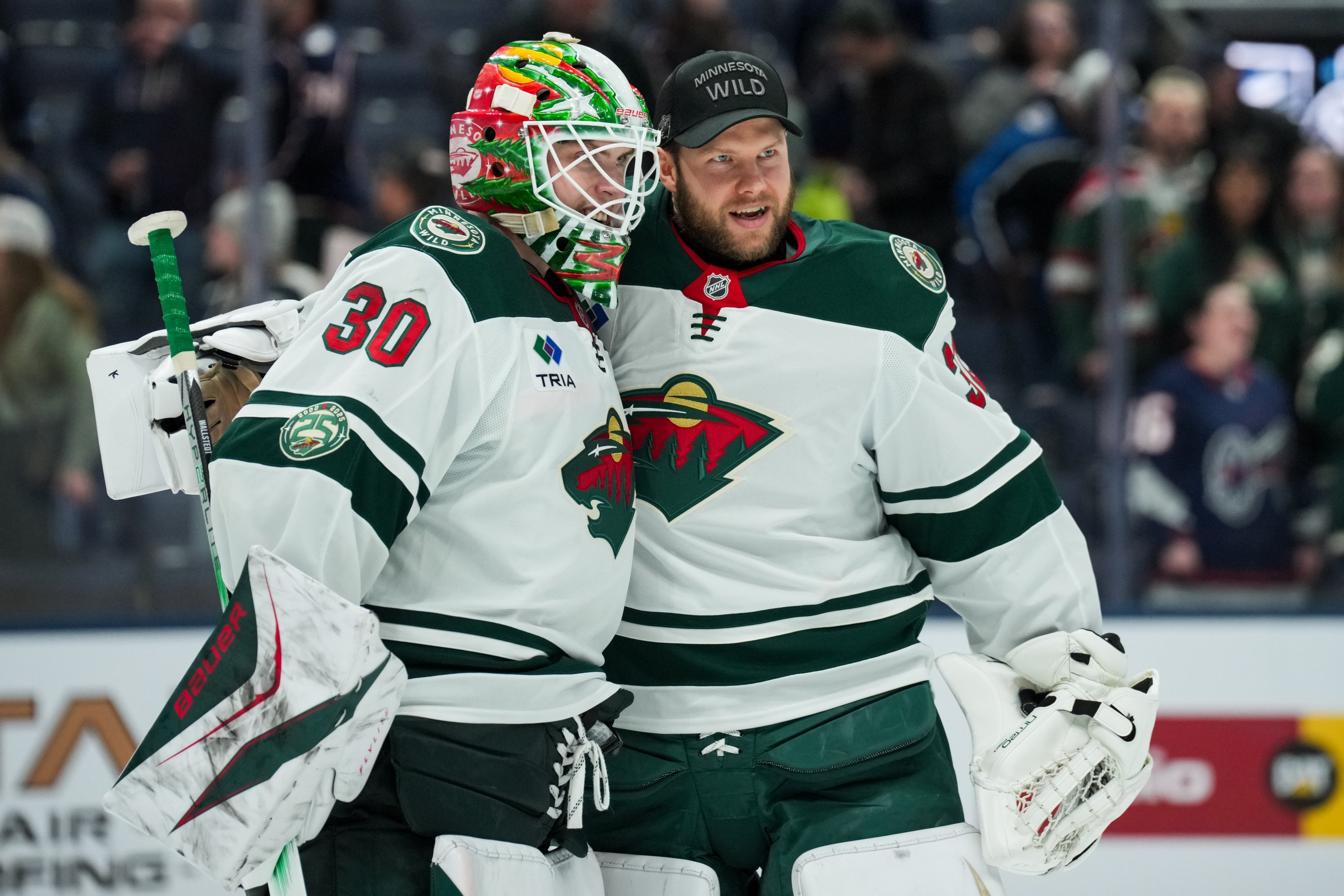 It feels like the Minnesota Wild’s goaltending duo of Filip Gustavsson and Jesper Wallstedt is extremely special. The anchor of a team that looks poised to turn regular-season promise into a deep spring run reminiscent of the franchise’s magical 2003 run backstopped by Dwayne Roloson and Manny Fernandez. In both eras, the Wild have relied on a steady duo in the crease to stabilize a roster built on structure, depth, and opportunistic scoring. Two decades apart, the scripts feel similar in that they feature two goaltenders playing at an elite level. The significant difference between these two teams is that the Wild now have a few elite goal scorers and a defense that can drive the offensive play while still maintaining defensive responsibility. If this team is going to break through the Western Conference in the playoffs, it's going to start in the blue paint. Gustavsson has emerged as a workhorse for Minnesota, logging starter minutes while playing with a calm, economical style that allows the Wild’s defense to stay aggressive in front of him. His recent seasons show a pattern the fans can trust. He has a goals against average in the mid-two’s and a save percentage in the low .910. Gustavsson also has a knack for keeping games within reach even on nights when the team hasn’t been its sharpest offensively. His play perfectly complements the Wild’s identity, built on patience, tight checking, and grinding opponents down over 60 minutes. Meanwhile, Wallstedt offers both security and intrigue as the highly touted first-round pick waiting in the wings. When he gets the net, he looks the part: technically sound, composed through traffic, and unbothered by chaos around the crease. He can track the puck through traffic as well as anyone in the league currently. He has a mature ability you would often associate with a veteran goaltender: the ability to shake off an unlucky bounce or defensive breakdown. Together, the duo gives something every other team in the NHL craves. A tandem that can win different ways without the drop off that usually comes when the starting netminder has the night off. For die-hard Wild fans, it's hard not to think back to Roloson and Fernandez when watching this duo settle into their roles. In 2003, Jacques Lemaire turned to each goalie at different moments. He leaned on Roloson’s steady positional style and Fernandez’s more explosive athletic presence to match the rhythm of a series or spark the group when it needed a jolt. That flexibility created a safety net that allowed the rest of the lineup to play on its toes, knowing there was always one more layer of trust behind them. Gustavsson and Wallstedt bring a similar vibe with a modern twist. Gustavsson’s quiet efficiency mirrors Roloson in many ways. At the same time, Wallstedt’s dynamic reads and confidence on big stages echo the swagger Fernandez brought when he jumped into the crease and took over a game. For opponents, especially in the playoffs, there is no easy adjustment. No “backup night” where the shooters can exhale. Matched with the Wild’s stellar defensive core, this is going to be a nightmare for opponents to play against at all times. This version of the Wild is not just fighting to squeeze into the tournament; the numbers and projections hint at a team positioned to make real noise once it gets there. Minnesota sits firmly in the playoff picture with strong underlying results and postseason odds that place them among the more secure teams in the Western Conference. What elevates their ceiling is how cleanly their defensive structure and goaltending fit together. The Wild limit high-danger looks, clear bodies from the front of the net, and rely on a mobile blue line to move pucks quickly, all of which play perfectly into Gustavsson’s rebound control and Wallstedt’s ability to track lateral plays, and even play the puck as a third defender. In tight one-goal playoff games, those small edges often decide who advances and who is shaking hands too early. That 2003 run still serves as a blueprint for what this group can achieve, or perhaps even more. The 2003 team was not the most talented on paper. Still, they were connected, stubborn, and backed by a tandem that made everyone a little taller on the bench, erasing series deficits and toppling favored opponents along the way. The Xcel Energy Center turned into a cauldron that spring, and every big save from Roloson or Fernandez felt like a turning point waiting to happen. This year’s roster has more top-end offensive talent than that early-era team, but the emotional core can be the same if the goaltending continues to hold up the way it has so far this season. Gustavsson’s recent playoff experience and Wallstedt’s big-game pedigree, winning bronze at the 2022 World Juniors on the international stage, give Minnesota a sense of inevitability in net. No matter how the bracket breaks, the Wild don’t walk into any series outgunned at the most important position. Recent seasons have been marked by early exits and “what ifs,” but the mix of a maturing core and this emerging tandem has shifted the tone around the franchise. In a conference loaded with high-octane offenses, few teams can confidently say they have two goalies capable of carrying them through a series. That’s exactly the kind of edge that turned 2003 from a nice story into a real threat. Twenty-two years after that first magical run, the Wild again have a team that defends hard, scores by committee, and trusts its goaltenders to hold the line when the margins get razor thin in April and May. If Gustavsson and Wallstedt can tap into the same resilience and shared load that defined Roloson and Fernandez, this duo might be remembered as the backbone of the deepest playoff push Minnesota has seen since that unforgettable spring.
 -
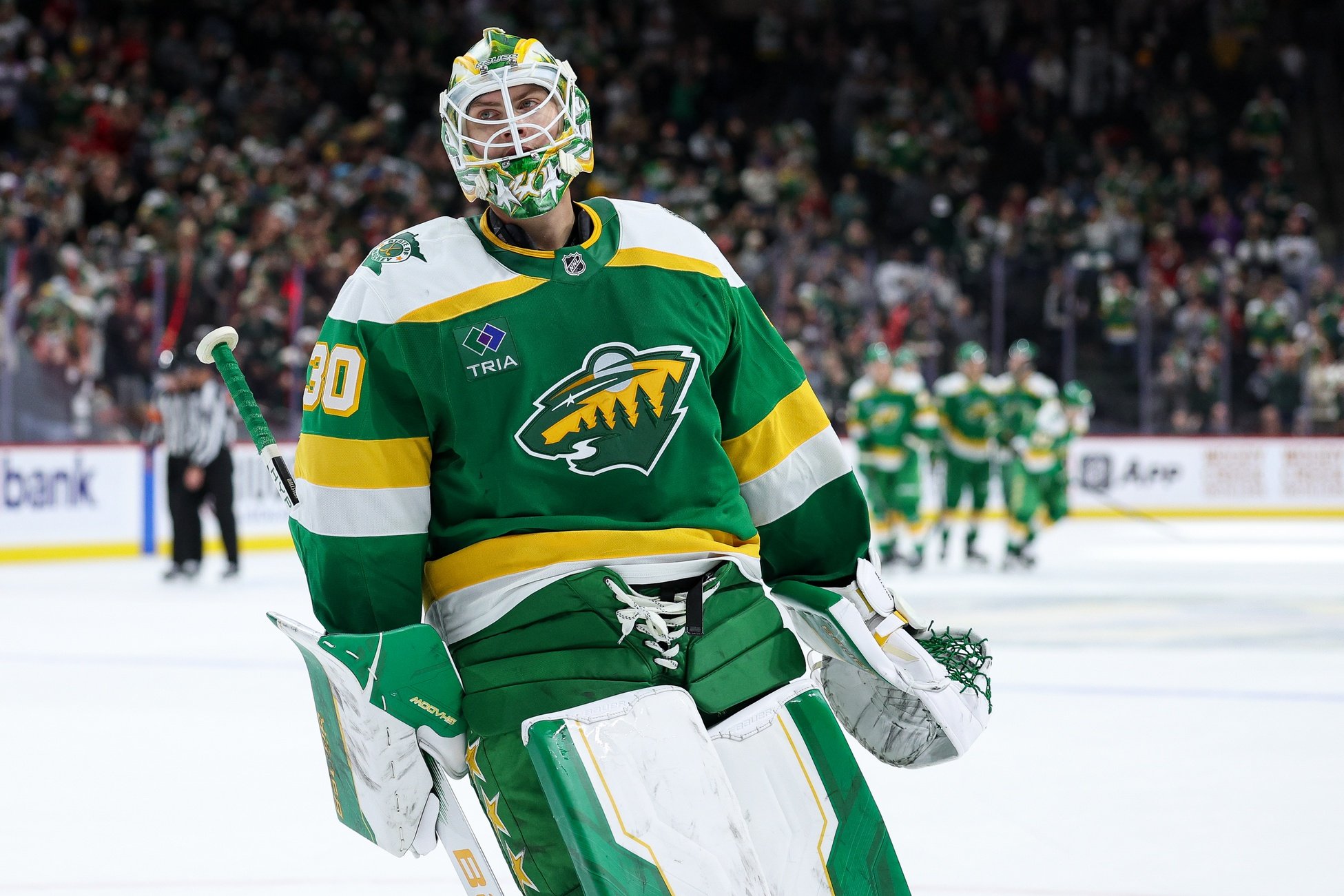 There’s no one-size-fits-all approach when it comes to winning in the NHL. While there are lots of ways to win a hockey game, the best teams in the league generally have a well-developed identity. The Florida Panthers are relentless forecheckers with total buy-in from every player; the Colorado Avalanche blitz with pace and puck possession. The Minnesota Wild kind of lacked an identity until they started winning. With the duo of Filip Gustavsson and Jesper Wallstedt, Minnesota is becoming a team built on a high-end goaltending battery. Wallstedt is the league’s hottest goaltender, with three shutouts in his last four starts. Gustavsson has responded by also playing his best hockey of the season, with a .921 save percentage since the start of November. The hot streak by both goaltenders has been the driving force behind the Wild going 9-1-1 this month and turning around a difficult start to the season. Two goaltenders playing so well could lead to a few outcomes. There may be some calls to trade one of the goalies while they’re at peak value. There could be a goaltending controversy over who becomes the clear starter. Or you could also have two good goalies. With Wallstedt and Gustavsson on team-friendly contracts, the best option is for the Wild to have two high-end starters. Thankfully, John Hynes seems bullish on going with a rotation. "Right now, the way both guys are playing is for sure. That’s what we’ve done for the last few games. I would anticipate that moving forward," Hynes said. "I think there might be opportunities and stretches in the season where you possibly could ride one guy a little bit more than the other. But the way our two guys are playing and competing, it looks like a good recipe right now." The duo also agrees that their high-quality play is pushing them to be better. Jesper Wallstedt reflected on the dynamic recently, saying that it’s been a positive development for both of their games. “It makes both goalies compete, and both goalies get better from it, I think," Wallstedt said. "I think if both want to play as much as possible and kind of make the other one play a little less, I think that’s a healthy competition, and obviously, I know my role a little more coming into this year.” That healthy competition has obviously worked wonders for the duo. We’re looking at stats from a small sample size, but they don’t even scratch the surface of just how dominant the duo has been. Since November 1, the Wild lead the league in 5-on-5 save percentage with their goalies saving 96.53% of shots on goal. They’re second in the league in that stretch in high danger save percentage with an 88.89% mark. That accomplishment is especially impressive considering the Wild are giving up 26.56 scoring chances against per game, which is 12th-most in the league. In that same time frame, Wallstedt leads the NHL in GSAA/60 (1.52) while Gustavsson places 18th (.38) out of the 73 goalies who have made more than one start. They’re also both top 20 high-danger saves per 60 with Gustavsson in 14th place (6.87) and Jesper Wallstedt in 18th (6.65). Of course, Minnesota’s goaltending in the last month is challenging to count on long-term. Wallstedt isn’t going to continue shutting out three of every four opponents he faces. There’s a difference between a goaltending hot streak and being difficult to score against being a franchise’s defining identity. That identity comes when a team pairs strong goaltending with a stifling defensive structure that supports sustained success in limiting scoring. Fortunately, that’s perfect for the Wild. Minnesota has always been at its best when playing defensively sound hockey. Since the 2022-23 season, the Wild have surrendered the 3rd-least high-danger chances against (2645) in the league while ranking 11th-lowest in high-danger chances for (2851). Minnesota also ranks 3rd in expected goals against per game (2.79) and is a bottom-ten team in expected goals for per game (2.95). It may not be the most exciting brand of hockey, but the Wild are clearly constructed to limit chances and play the dreaded “low-event” style. Still, while it may not be glamorous, it’s actually the perfect fit for a team that is leaning into an identity as hard to score against, with two elite goaltenders. It’s a formula that has produced positive results in the past, especially for teams that need to get as much as they can out of a roster with limited scoring ability. The best example of a template the Wild could follow is emulating the success of the Barry Trotz-era New York Islanders. From 2018-19 through 2020-21, the Islanders were one of the best teams in the NHL. They reached the conference finals twice, including a Game 7 against the eventual champion Tampa Bay Lightning in 2020-21. New York’s calling card was low-event hockey with potent goaltending duos. During that time, the Islanders led the league in save percentage from their goaltenders and, like the Wild, ranked in the top ten in expected goals against per game (2.61) and in the bottom ten in expected goals for per game (2.65). The Islanders achieved that defensive excellence with sterling goaltending duos, including Robin Lehner and Thomas Greiss, Semyon Varlamov and Thomas Greiss, and Semyon Varlamov and Ilya Sorokin. During that time, every goalie had a positive goals saved above average rating, and none started more than 45 games in a season at any point in the stretch. While they never reached the Stanley Cup finals, the Islanders clearly delivered strong results and were a tough team to play against every time they took the ice. In the past, the Wild have played that low-event style, but haven’t gotten good enough goaltending to follow through on it fully. That’s the issue with playing slow hockey. When you’re giving up goals and can’t keep up with scoring, it’s a bad recipe for winning. But that equation finally looks different now. With Wallstedt and Gustavsson giving Minnesota the goaltending this system has always required, the Wild can finally commit to the identity of being a goalie team.
- 10 comments
-
- 6
-

-
- minnesota wild
- nhl
- (and 2 more)
-
 View full article
 -

Tyler Pitlick, the Ultimate Journeyman, Has Come Home
Neil Urbanski posted an article in Minnesota Wild
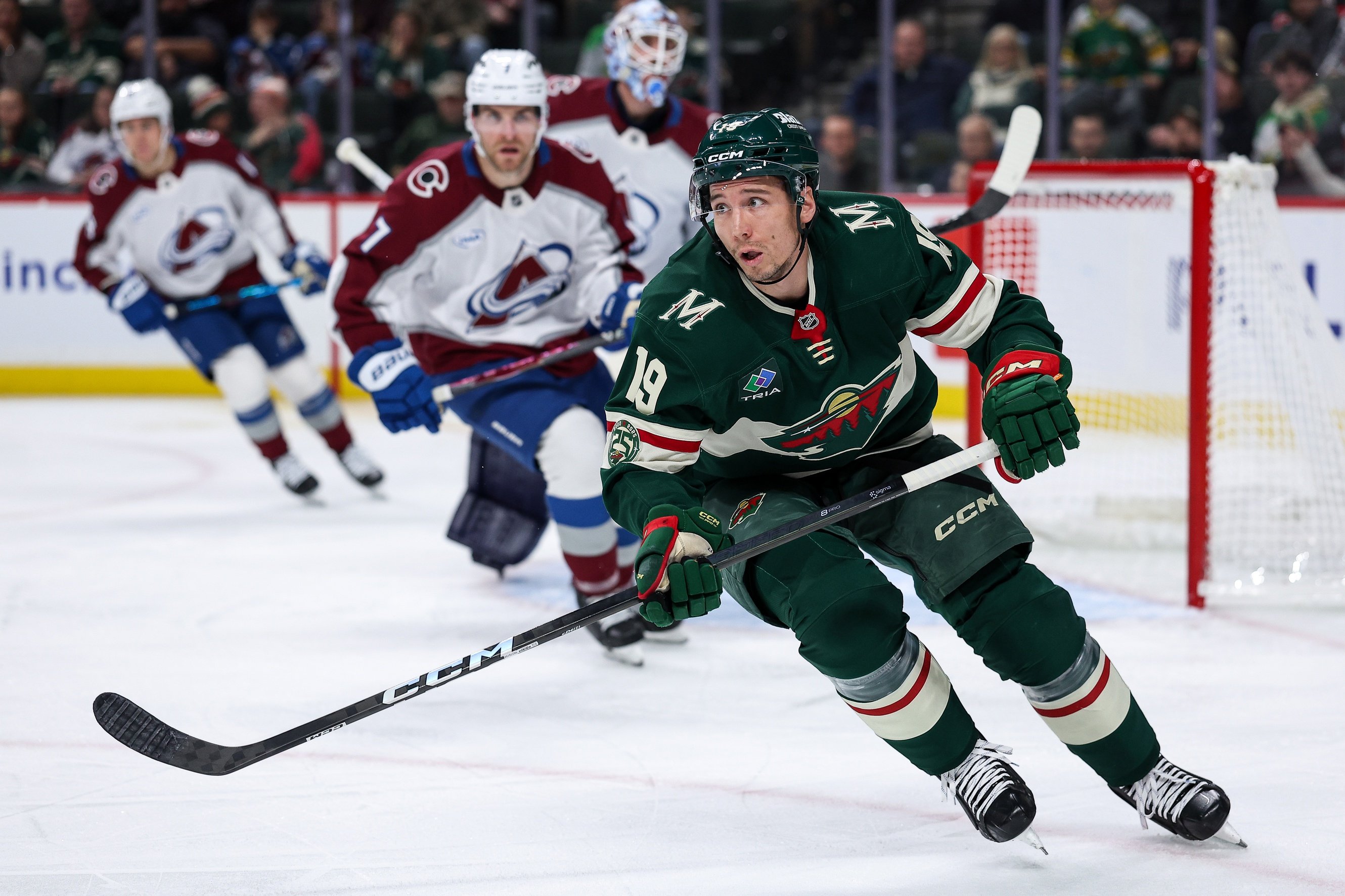 Do a quick web search of the word “journeyman,” and you’ll find definitions like “a worker or sports player who is reliable but not outstanding” (Oxford Languages), or “an experienced reliable worker, athlete, or performer especially as distinguished from one who is brilliant or colorful” (Merriam-Webster). Not included in these definitions, but likely to be added soon, is a picture of Minnesota Wild winger Tyler Pitlick. Pitlick is a well-traveled veteran with hockey roots in Minnesota. The former Centennial Cougar, who also spent a season playing college hockey for Minnesota State (Mankato) in 2009-10, found his way back to his home state this season when the Wild signed him to a two-year, two-way contract last summer. In between, Pitlick embarked on a journey that now finds him in his 15th professional season and playing for his ninth NHL franchise, with five AHL stops added in along the way. All told, Pitlick has played in 442 NHL regular-season games and another 282 in the AHL. Over his NHL career, the 34-year-old Pitlick has served primarily as a depth winger who can slot in on multiple lines and play an honest, straight-line game. He’s spent much of that time as a 13th or 14th forward, which is the role he’s found himself in again this season. It’s clear that Pitlick has settled into his NHL identity. In a league where everyone was a star player as they came up through lower levels, it can be a harsh reality check for some when they realize that if they want to remain in the NHL, they have to develop new identities as depth players who are expected to make positive contributions in limited ice time. The Wild recognized that Pitlick can provide value as an organizational depth piece and compensated him accordingly with a contract that pays him $775,000 in the NHL and $300,000 in the AHL, making him one of the highest-paid players in the AHL. He’s barely been there, though. Minnesota has been ravaged by injuries yet again this season, and Pitlick and Ben Jones have spent most of the season in the NHL as a result. Pitlick was first called up to the NHL in October, was briefly sent down in November so that the Wild could avoid putting him on waivers, and then recalled to Minnesota again on November 15th, where he’s been ever since. Since being recalled to Minnesota, performance has been such that, after the blockbuster Quinn Hughes trade that opened up some forward spots when the Wild sent forwards Marco Rossi and Liam Ohgren to Vancouver, Pitlick has earned the opportunity to remain in Minnesota as the 13th or 14th forward, even as the team returns to full health. To begin with, his promotion was well-deserved. Pitlick has clearly been one of the best forwards in Iowa during his brief stints there, producing 4 points in 5 games and averaging 2.6 shots on goal per game, which still ranks second on the team behind now-traded Liam Ohgren. Pitlick represented a better call-up option than Hunter Haight because Pitlick's game and development are unaffected by time spent in the press box as a healthy scratch. His track record bears this out as well. In three of his previous four NHL seasons before this season, in which he served as a depth forward in stints with the Arizona Coyotes, Calgary Flames, Montreal Canadiens, St. Louis Blues, and the New York Rangers, Pitlick produced a positive relative expected goals percentage. That means that he has developed into a player who can consistently deliver possession value when his number gets called. He’s been able to do this despite only playing an average of 43 games per season. Pitlick knows how to step into the lineup and make an impact when needed, even if he’s not getting consistent playing time. That trend has continued so far this season. Pitlick’s expected goals percentage of 47.74% puts him in the 38th percentile among NHL forwards who have played at least 50 minutes at five-on-five, and his relative expected goals percentage of -2% puts him in the 40th percentile. Both of those numbers place him as an average third-line player and above-average fourth liner. These statistics bear out on the Wild as well. Among 15 forwards with at least 50 minutes of five-on-five ice time, Pitlick ranks 10th in relative expected goals percentage and 9th in actual expected goals percentage. He’s produced an expected goals percentage of over 50% in 11 of his 22 games this season, including four of his last five. Pitlick has often been able to elevate the play of the fourth line as well. His most common linemates this season have been Ben Jones and Yakov Trenin, both of whom have seen their possession numbers increase when they play with Pitlick. Most recently, the Wild have been using a fourth line of Pitlick, Jones, and Nico Sturm, and that trio has produced an expected goals percentage of 59.3% in their five games together (though Sturm also deserves a lot of the credit for that). Even if the Wild brings in scoring help before the trade deadline, and he gets pushed further down the depth chart, there’s no doubting what Pitlick can provide when called upon. Overall, Pitlick’s emergence as a reliable, plug-and-play veteran for the Wild this season has been one of the quiet subplots to a season that has the potential to turn into something special. It could be that the journeyman from Minnesota has come full circle just in time to ply his trade for a contender.
- 10 comments
-
- 3
-
-
- minnesota wild
- nhl
- (and 1 more)
-

Article: Overpaying For Quinn Hughes Is Impossible
Fortis replied to Tony Abbott's topic in Minnesota Wild Talk
IMHO, great deal by BG even if it seems like a gamble now. I wasn’t impressed with Buium’s overall game, so I view the trade as essentially Rossi + 1st round for one of the best players in the league. I don’t think Ohgren will ever excel at the NHL level. My question is how do the Wild implement Hughes into the team? In the last 25 years, the Wild have only had success with a suffocating defensive game. This isn’t Hughes’ game. Do the Wild go back to the drawing board and change their entire system mid-season? Our Power Play is atrocious right now…do we plug Hughes in and hope it changes? Do we change strategies? Or do we change coaching staff to support a more offensive system? Adding Hughes changes the entire identity of this team (if only for 1.5 seasons)- 90 replies
-
- 4
-
-

-
- minnesota wild
- nhl
- (and 1 more)
-
 More from Tom on the not tanking strategy that Guerin used, probably a promise to OCL if he bought out the 2 contracts. He did promise "competitive" teams. And that is precisely what the only decision maker on the Wild wanted. During that time he traded out players and got extra 1sts and 2nds. These guys are finally acclimating to the roster this year, with a couple of sprinklings in the past couple of years. This team is becoming younger. The issue here isn't the mushy middle as we appear to be right now. The issue is we will not look the same in the later part of the year. Why? Because it takes rookies time to acclimate, especially when those rookies aren't your generational players. We had successful runs to the playoffs the last 5 years, derailed by 1 year filled with injuries, followed by another where we squeaked by. But we then turned over a third of the roster, mainly allowing rookies to acclimate. Everyone with any sense would realize that the start of this season was not going to be like last year, but, instead was going to be slow, but heading down the stretch, this team would be far better. Opportunity has struck for younger guys, and these guys are filling roles like the calm influence of reclaimed Hunt, Buium getting better defensively and picking his spots better offensively, The Wall showing last season was a fluke, Yurov proving he can play in the top 6. Even Ohgren is looking better. We need these guys getting better, and while we are still dealing with injuries, they get more TOI. Now, how do we keep them fresh during the Olympic break? The Wall might be playing. Then, on the other side of established players, we see Boldy taking another step and solidifying himself in tier 3 and pushing for tier 2 status. Rossi was also performing better until injury took out his foot. The thing is, typically a project under construction looks like a disaster until it's finished. If you simply want to look at results thus far in the season, then, sure, let's just say same old Wild, mushy middle team. There's no hope, we'll always be that way. But this is not a linear progression. It will have peaks and valleys, but the potential for much more is in the lineup. I do not agree with getting the best scorer at the TDL. That is not the identity. What we need is the best scorer with a 200' game who can also play in this system. We found that 'Senko has not been a good fit for that because of his defensive deficiencies. Targeting guys who have offensive upside but are solid all over is the way to go. For instance, I would think a center like Elias Lindholm would probably thrive here (not saying he's available). As for the mushy middle, this middle has expanded to include about 2/3rds of the league. We have 2 top dogs in the West, none in the East, and 3 bottom feeders in the West. The East is completely up for grabs! Injuries has derailed the Panthers so far. Nobody is out of it in the East. A bottom type team can go on a heater and easily be in the playoffs, and the Atlantic division is really tight. What we want is to go into the Olympic break in position to make the playoffs. I would not give up a ton of assets to land an ROR, but this guy is a nice fit with his game for what we need. I just don't think he's got that much left in the tank, maybe a couple of more years. Giving up Ohgren + 1st seems too expensive for me. But, he is a 200' center with size who wins faceoffs and I've always liked his game. He ages decently because he has never relied on speed, but on positioning.
 -
Article: The Wild’s Goalie Duo Has Become Their Identity
mnfaninnc replied to Robert Brent's topic in Minnesota Wild Talk
I think the identity of the team is low event hockey. They have started packing it in on defense and letting shots come from the outside. They've had real good goalie play, but the identity, I believe, comes from the defense. Though, I will add that some of our best seasons came with a really good goalie tandem. If you're on defense and you can let shots come in from the outside confident your goalie can handle them, I think that lets you play a little more packed in. This is how they have to play right now.- 10 replies
-
- 2
-
-
-
- minnesota wild
- nhl
- (and 2 more)
-
 Teams with a defensive identity score less so I think it's a little misleading to say the goaltending is masking issues. Additionally the Wild have been decimated by injuries at the center position. I think the winning streak despite the injuries is showing how good their depth is. Lastly, Kaprizov is not himself. He can't separate with his skating this year. Especially 5v5. Is he out of shape? Injured? If he finds his stride we have two legitimate scoring lines.
 -
 A team must play to their identity. We have some solid vets on D with Spurgeon, Brodin, Mids and Bogo. We also have a couple of very good young D-men (Faber and Zeev) creating a very dependable defense. We also have quite a few forwards that take pride in their defensive capabilities. It appears that once we recognized who we are... we started winning. Just a guess here... but I'm betting that Spurgeon and Foligno were the driving force reminding everyone what we are. Kuddos to those 2 for their leadership skill.. if I'm guessing correctly.
- 14 replies
-
- 7
-
-
- minnesota wild
- nhl
- (and 3 more)
-
.thumb.png.4d9e558e4e4aef48d20f2cd11166ae40.png)
Article: Keeping It Boring Is Key To the Wild Turnaround
Citizen Strife replied to Tony Abbott's topic in Minnesota Wild Talk
Most important: Foligno and Trenin are just wrecking faces. A lot of the Wild's success and energy last night was in no small part to laying into Vegas hard. This team will probably never be a track meet team. If the first part of the season is any indication, they shouldn't try. It led to them stumbling really hard. Hynes talked about "identity" a lot. Punching one of the highest scoring teams in the mouth and keeping the last 4-5 opponents to 2 goals or less is what Wild games are. Hunt for Jiricek also made a huge difference. One day, Jiricek may be better, but results never lie: Hunt is a better fit.- 29 replies
-
- 7
-
-
- minnesota wild
- nhl
- (and 1 more)
-
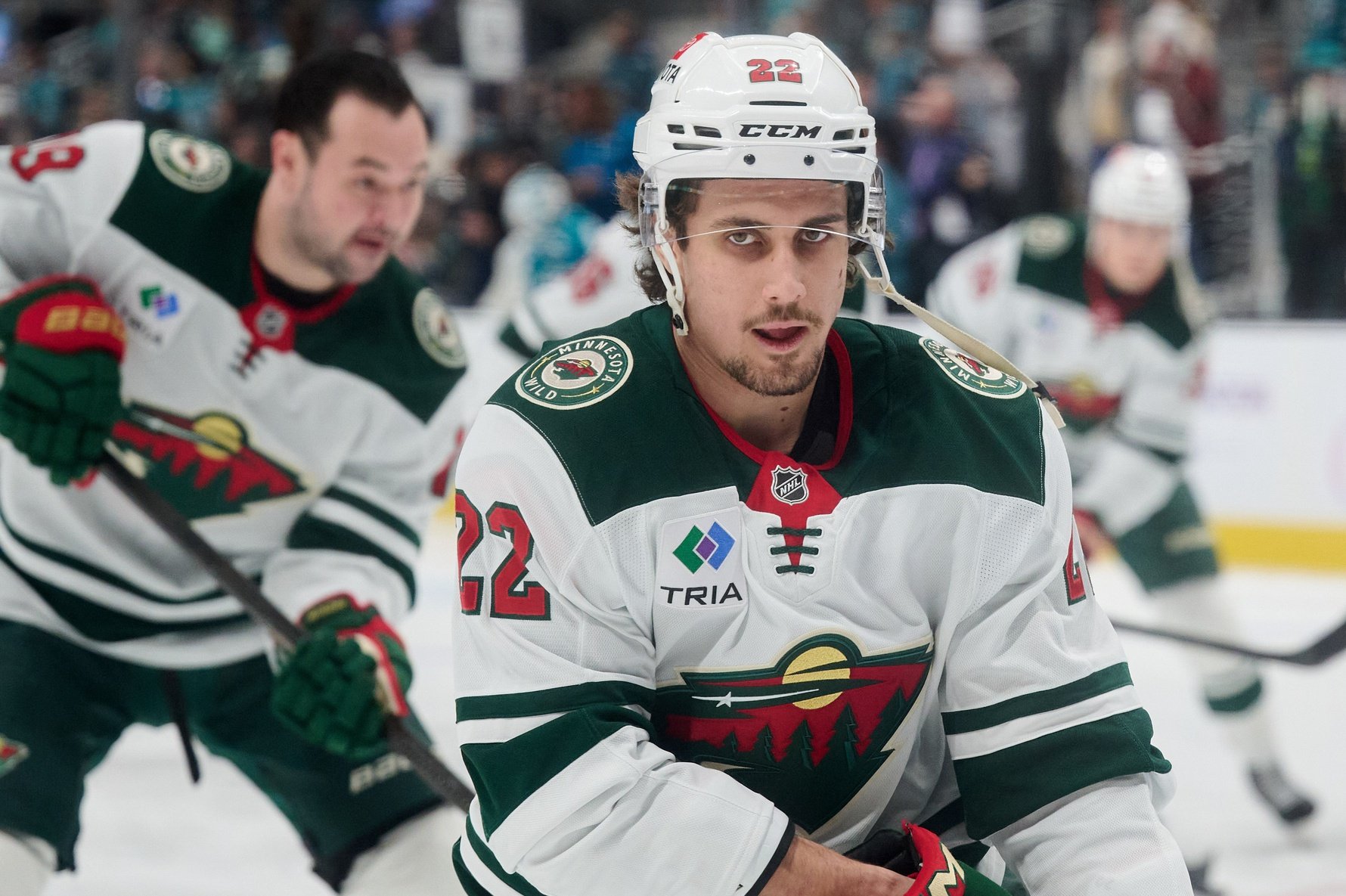 As February commences, teams are gearing up for their playoff runs. The Minnesota Wild sit third in the Central Division and are still 7 points clear of the Calgary Flames for the second wild-card spot. While Minnesota’s playoff spot is relatively secure, it’s undoubtedly more precarious than earlier in the season. Injuries to stars like Kirill Kaprizov have left the team looking for answers on how they can hold onto their spot in the postseason despite a lack of roster depth. Minnesota needs to win to secure its spot in the postseason, and a group of unlikely heroes has emerged. The Wild’s fourth line was crucial in some of their recent wins. Most notably, the line was perhaps the team’s best during their recent three-game win streak, which included victories over the Chicago Blackhawks, Toronto Maple Leafs, and Montreal Canadiens. The Wild’s Fourth Line Is Developing An Identity The Wild's depth scoring has been an issue this year. The bottom six haven't scored much for the team. Frederick Gaudreau is the unit's leading scorer, with only 23 points in 51 games. Still, a bottom-six can contribute in far more ways than their scoring. On many teams, the depth forwards are there to play low-event hockey, which is difficult for other teams to play against. The fourth line has been excellent at that role in recent games. Devin Shore, Marat Khusnutdinov, Jakub Lauko, and Ryan Hartman (in the Chicago game) did an outstanding job driving play in the Wild's recent winning efforts. They play direct, fast, and physical hockey. John Hynes spoke to the media about the fourth line's efforts and how it contributes to the team's identity. "It's nice that Lauko, Khusnutdinov, and Shore have been factors in the game. Just the energy, the competitiveness, the depth scoring that we're getting." Hynes said, "Those guys are really good players, but the fact that they're playing to the identity that they're playing with right now, that's truly what our team needs, right now and down the stretch." The fourth line has been relatively quiet this year. However, their recent improved play has resulted in their offense finally picking up. Over the three games discussed, the line was in the top two producers for expected goals for in each matchup. Minnesota Wild vs. Chicago Blackhawks Minnesota Wild vs. Toronto Maple Leafs Minnesota Wild vs. Montreal Canadiens If expected goals don't do much for you, the line's strong play also resulted in concrete production. Shore scored his first goal of the season against Montreal and added an assist in Toronto. Khusnutdinov scored his second goal of the year against the Maple Leafs. Lauko assisted on Kusnutdinov’s goal. Playing competitive and direct hockey has produced results, and they have started driving winning. Given their recent lack of offense, the team needs the fourth line's low-event but fast and physical hockey. The fourth line’s play seems to fit into the defensive identity Hynes is developing in Minnesota. Khusnutdinov Rounding Into Form While the fourth line has performed well in recent games for the Wild, Marat Khusnutdinov has been particularly encouraging. He was one of the Wild's more interesting prospects entering the season. The Russian center has been tasked with anchoring the bottom unit this season and has had mixed results. Fortunately, that is becoming a more consistent effort for the Wild's young forward. Khusnutdinov entered the season with high praise for his motor, skating speed, hockey IQ, and general competitive play. He'll likely always project as a bottom-six forward, but he should provide some offensive output while being defensively responsible and hard to play against. However, that offensive upside hasn’t manifested this year; he entered the Maple Leafs game with only one goal and three assists. Khusnutdinov's potential flashed against the Leafs when he scored the game's first goal on a tremendous forechecking play by the fourth line. Khusnutdinov showed his knack for being in the right spot when he found a soft spot on the ice and scored his second goal of the year. The Wild should expect more from Khusnutdinov. Still, his goal provides hope that his strong play lately could yield more positive results. John Hynes spoke to reporters about Khusnutdinov's recent run of good form. "We needed more from throughout our lineup, and he certainly has the ability," Hynes said. "But [Khusnutdinov is] playing a more tenacious game, he's playing fast. He's harder on pucks. He's playing with a little bit of an edge to his game." When Hynes talks about the fourth line's identity and playing with speed and competitiveness, that effort should fall on Khusnutdinov more than anyone else. The Wild are more committed to him than any other fourth-liner. Most fourth-line players are replaceable, but Khusnutdinov is a player they'll want to develop even further. Khusnutdinov's play has turned that line around, which is fantastic for the Wild. More Work To Be Done Of course, things aren’t perfect with the Wild’s fourth line, and they’ll need to continue their success to contribute to a playoff run. While Minnesota’s three-game winning stretch ingratiated the fourth line among Wild fans, the team’s most recent game against the Ottawa Senators left a bad impression. No one on the Wild performed well, so you can’t blame the fourth line for a 6-0 shellacking. Still, Shore, Khusnutdinov, and Lauko had significant issues on the offensive end. Despite spending 6:31 on the ice, the line contributed 0.0 expected goals, meaning they did not commit a single action during their time that could hope to result in a goal. If there are any positives we should take away from the performance, the line had the fewest expected goals against any line that played over two minutes. Still, the team performed poorly. The Wild must hope this was a blip on the radar and not a sign of things to come. Despite the bad game, the fourth line has contributed many contributions over the last several games. They play the way Hynes wants and are committed to the team's identity. The Wild will win games based on their best players’ performance. Matt Boldy, Brock Faber, and players of that magnitude are far more vital to their success than the fourth-liners. Still, a strong depth unit can help build a team’s identity and contribute to wins on nights when Minnesota’s best players aren’t performing. If the Wild’s fourth line continues to play the same role they did during their three-game winning streak, it could play a crucial role going into the playoffs.
 -
 People act like Ek is the reincarnation of Gretzky. Scored over 60 points twice. Has a career FO% of 47.7. And he is considered our top center. If you can improve that spot by trading him why not trade him. But as a fanbase who likes to hold on to players that they consider as one of them. Ek fits the bill as a Minnesota one of us guy. So he will retire as a Wild player and be put to rest at Fort Snelling. Reality is he is a middle six center and should be on the third line with two other centers on the team who are better than he is. This status quo of adding players that set the identity of the team means your team coming out of training camp sucks. How about we try something that all the elite franchises have done over the last... well forever. Tank get good players and then play for a cup. People will say what about Kirill and his contract. Well that contract starts next year. If you can get a top five pick this year you can draft a center that will center Kirill for the next eight years. If you can tank and still have Ek and Rossi on this roster with a top five pick in this draft you might have a shot at actually playing for a Stanley Cup.
- 48 replies
-
- 3
-
-
- minnesota wild
- nhl
- (and 1 more)
-
View full article
-
 Pretty good review for not being there in person!!! Hopefully this little run of solid play continues as the lines get sorted out and guys start to gel. The team i saw opening weekend was much different than the one I saw last night. Mayhew is a good pickup for us, but probably not much of a factor for up North. And we do have Liwiski for "entertainment purposes only" who may get to his 10th fighting major by game 15!! Once again, it's early...for both teams...hopefully by 12-15 games in a true identity will start to show.
- 7 replies
-
- 3
-
-
- minnesota wild
- nhl
- (and 1 more)
-
 In OT when the Wild lose, you have arguably their best three players on the ice. #97, #14, and #7 have a breakdown and that's all she wrote with Connor shooting. He took the lesser money too and is a winger who can score. The contrast after Kirill coughed it up hurt a bit. Almost like OCL shoulda kept his damn mouth shut and perhaps Kirill is only getting 12-13M like we originally suggested. The defense is kinda jumbled and lacking identity. Getting shelled every game for 5-6 goals, they're simply not defending well enough. The pairings are questionable too. Hynes and Guerin will definitely get more and more criticism if the Wild continue to lose. Another few weeks like this and I'm saying go for McKenna. Trade for picks at the deadline. I just don't see the defense all of the sudden becoming a shutdown force that adds goals and does that consistently enough to recover the MN defense first reputation. There's a lot of flaws in their pairings and you're noticing Bogosian was probably more valuable to the defense group than he got credit for. The Wild can possibly work their way back into a decent position but they just kinda look like they got what Nashville had last year. All looking around doubting and subconsciously pointing the finger around. The anti-chemistry of sorts. Soon enough will be the Thanksgiving benchmark. See where the Wild are at then.
 -
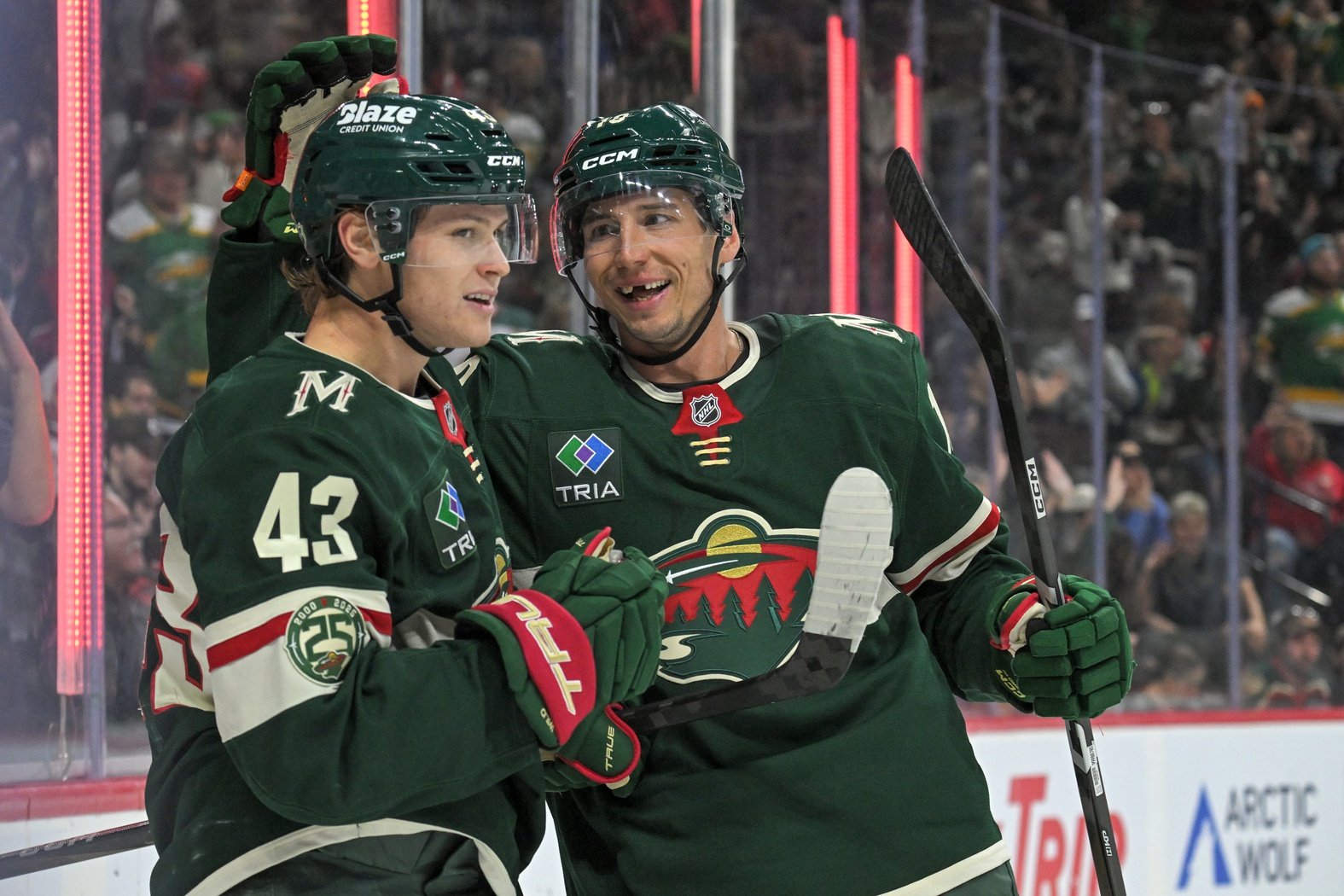 There’s no sugarcoating it; the Minnesota Wild stink so far this season. The reasons for that are up for debate, but the results are not. A 3-5-3 record through eleven games and a humbling start to the home stand has left both the team and its fans searching for answers after their most recent defeat, a 4-3 overtime loss to the rival Winnipeg Jets. Whenever an NHL team is struggling, one of the first places to look is the team’s minor league affiliate. Fans might be wondering if any players in Iowa are ready to make the journey up I-35 and provide reinforcements for the big squad. The Iowa Wild also had a rough start to the season, dropping their first four games while their opponents outscored them, 20-6. However, the team seemed to find their game over the weekend, heading down to Austin and convincingly sweeping the Texas Stars. They followed that up with an overtime loss to the undefeated Grand Rapids team last night, falling 4-3 despite outshooting the Griffins 40-29. I tuned in over the weekend to check in on the “Baby Wild” in action versus Texas and saw a team that is starting to find an identity. Iowa had a dominating performance on Friday, outshooting the Stars 31-12 and winning 3-1. On Saturday night, they produced a defensive clinic, winning 2-0 to complete the weekend sweep. Samuel Hlavaj was between the pipes on Friday, while Cal Petersen earned the victory on Saturday with his 13th career AHL shutout. New additions boost offense Several recent additions have bolstered the team, including Liam Ohgren and Hunter Haight, who the Wild recently sent down to get more playing time and, in Ohgren’s case, find some much-needed confidence. They also recently acquired 22-year-old former first-round pick Oskar Olausson from the Colorado Avalanche in a change-of-scenery trade that sent Kyle Masters packing. Iowa also signed free agent forward Gerry Mayhew to an AHL contract, reuniting with the former fan favorite who is still Iowa’s all-time leading goal-scorer. Mayhew and Olausson provided an immediate boost on the scoresheet. Mayhew opened the scoring on Friday night with a power play goal, assisted by Olausson and Ohgren. Olausson found the scoresheet again on Friday when he scored a beauty of a goal on a blistering wrist shot from the high slot. The Swede’s superb debut performance earned him the game’s first star. Each of them turned in another two-point performance against Grand Rapids last night, with Mayhew scoring twice and Olaussion getting two assists. More importantly, Olausson and Mayhew, along with Haight and Ohgren, have given Iowa some much-needed depth and versatility at forward. The team’s new-look lineup has looked formidable, showcasing three scoring lines and balanced defensive pairings. Heidt-Kumpulainen-Olausson formidable The Heidt-Kumpulainen-Olausson line was Iowa’s best throughout the Texas series last weekend, controlling play on many shifts. The trio read off of each other exceptionally well and look like a line that could provide significant play-driving value and scoring depth. Olausson has been a difference-maker with his skating and hockey sense, and has shown glimpses of the skill set that made him the 28th pick in the 2021 draft. He looks rejuvenated by the opportunity for a fresh start, and while it’s still early, he could be a sneaky good addition by the organization. Kumpulainen demonstrated that he can be an effective puck transporter and possession driver in the AHL, as he has been at other levels. He was consistently driving through the neutral zone with the puck, using his size and range to hold onto it and look for passing lanes. While he tends to spend too much time on the perimeter, he played a responsible, two-way game and avoided the egregious turnovers that he has been prone to make in the past. Heidt scored a goal on the tail end of a power play on Saturday, converting on a feed from Aube-Kubel after a nice passing sequence by the second power-play unit. Heidt is in his first pro season and was clearly lacking confidence during NHL training camp. Still, he’s shown flashes of his characteristic hard-skating, tenacious puck pursuit, and ability to make quick, efficient puck touches, especially effective in transition. Ohgren set up to succeed Ohgren is still trying to find his game after a humbling start to his NHL season, so it makes sense to place him on a line with two straight-line players like Haight and Aube-Kubel. They play with a pace that Ohgren will have to match, which should be beneficial, as Ohgren struggled to play with pace and be decisive with the puck during his stint in Minnesota. He should have the opportunity to handle the puck a lot more with two possession drivers on his line. Other notes Aube-Kubel looks like Iowa’s best all-around forward right now. The veteran with over 300 NHL games to his resume may have positioned himself to be the next call-up should the organization want to get a different look in their bottom six. Haight learned how to be a difference maker in the AHL last season and has already demonstrated the ability to play depth minutes in the NHL if needed. However, playing a lot in Iowa might be the best thing for getting him ready to hit the ground running on his next call-up. Bankier continues to improve, but it’s fair to wonder if he has the skating necessary to play at an NHL pace. He’s a smart player with good hands and a heavy stick, but he will have to continue to improve his footwork and quickness. Still, he’s developed into a valuable piece for Iowa and looks confident with the puck. Bankier is a restricted free agent at the end of this season, and he’ll need to have a strong year to earn another contract with the organization. Foudy is in his sixth AHL season and is an excellent skater who battled injuries and a deep depth chart during his time in Colorado. If he can stay healthy, he looks like a good fit on a line with Mayhew. Gleason Stands out on D While the Minnesota Wild look set on defense for now, should they run into injury trouble or decide to send someone down, Ben Gleason may be the best option to fill an NHL role temporarily. He looks good quarterbacking the top power-play unit and has been a solid point-producer in the AHL over his career. The 27-year-old moves well and could provide some mobility in Minnesota if needed. Iowa captain and Elk River native Matt Kiersted could also be a candidate for a call-up. He and Gleason played strong minutes all weekend, and Kiersted is also a proven veteran. Spacek looks more comfortable walking the blue line on the second power play unit than he did last year. Still, he’s working to improve his outlets in his own zone and isn’t a reliable enough puck-mover to warrant serious NHL consideration at this time. Lambos appears to have played himself out of the organization’s favor, and it would not be surprising if he finds himself with another organization next season. He’s a great athlete with excellent puck skills, but he’s a wild card in terms of decision-making. Still, he turned in some really solid shifts on the penalty kill this past weekend. Perhaps that’s his ticket to playing his way back up the depth chart. The Iowa Wild will be back at it this weekend when they host the Tucson Roadrunners for a weekend series. It looks like they may have found their footing in Texas, and a solid run of play would be a welcome source of positivity for the Wild organization.
- 7 comments
-
- 4
-
-
-
- minnesota wild
- nhl
- (and 1 more)
-
.jpg.17ec54875caeefb6f5db84ae1bf31768.jpg) When the Minnesota Wild take the ice for the 2024-25 season, it will be the team’s first full season under John Hynes. Unlike last year when Dean Evason started the season as head coach, Bill Guerin and Hynes will have the opportunity to fully build and tweak the team in Hynes’ image. That makeover is pivotal for Minnesota, a team many feel lost its identity last year. If the Wild are going to bounce back next year, it will be essential for Hynes to develop a new trademark style. Hynes has spoken about how important a team’s identity can be for its success. A Case of lost identity For most of the team’s existence, the Wild have favored low-event games they won with defense. Since 2013-14, the Wild have placed in the top half of the league in total goals against eight times. The 2023-24 season was their worst defensive season. They gave up 248 goals, good for 20th in the league. The Wild’s lack of defensive prowess had some obvious contributing factors. Two of the team’s most important defenders, Jonas Brodin and Jared Spurgeon, missed time with injuries. The goaltenders didn’t play great, either. Filip Gustavsson (-.11 GAA Better Than Expected) and Marc-Andre Fleury (-.30 GAA Better Than Expected) gave up more goals than expected, given the quality of chances they faced. The penalty kill was particularly poor, ranking 30th in the NHL. Last year, the Wild were an oft-injured club with poor special teams, an aging roster, and a few bright young stars. That’s not an identity, at least not a winning one. Minnesota’s lack of distinguished style concerns fans and media, and the team acknowledged that. The Athletic had several quotes from exit interview day that tell us where the Wild failed last year, but a couple stand out as being particularly crucial. “I’ve always said in years past how much I would have hated to play against us,” Ryan Hartman said. “And this year, I don’t know if I could have said the same thing.” Marcus Foligno echoed those sentiments and added a bit more fuel to the fire. “I just felt like we didn’t have that energy,” Foligno said. “That usually wasn’t the case seasons before. … I just felt that this year we really, when it came to being down a goal or two, it felt like we were a little bit sorry for ourselves.” John Hynes gives clues to Minnesota’s new approach Hynes' first order of business as the new head coach of the Wild should be to develop a new brand of Wild hockey. Hockey personalities tend to offer purposely vague quotes. However, we can gather clues from how Hynes has discussed his team this preseason. Look no further than Hynes stressing the importance of playing to his desired identity after an exhibition tilt with the Winnipeg Jets. Some important traits include playing directly, getting out of their own zone, and being fast on the attack. These are desirable traits that coaches value, but Hynes has specifically singled out those virtues on multiple occasions. He also praised Jakub Lauko for playing a fast and heavy game. When you compare Hynes' comments with his coaching history, you can see how the Wild will likely play. Minnesota will look to solidify its structures and play a simplified, aggressive, low-event game. Low-event was the name of Hynes' game in previous stops in Nashville and New Jersey. Hynes desires that the team plays direct, simple, and hard points towards the Wild adopting a similar style. He appears to emphasize speed more than in previous stops, but fast doesn’t necessarily equate to eventful hockey. Are the Wild equipped for a new look? It’s clear that Hynes wants the Wild to play a game predicated on speed, effort, accountability, and physicality. Whether Minnesota can live up to that task remains to be seen. At first glance, the Wild could have trouble playing a physical game. Hockey fans and front offices often equate physicality with being a large team. The Wild are not. They ranked last in average player weight last season and will climb only gradually to 29th this year. However, size isn’t the only factor in playing a “heavy” game. The Florida Panthers are only incrementally bigger than the Wild, and teams fear them for their play style. To play heavy, a club needs buy-in from the players and defensive accountability that allows the team to make classic proverbial “sandpaper” plays. Minnesota has its defense locked in for this season. It’s an area of the team that Bill Guerin has invested a lot in. Brock Faber will be another year older and hopefully improve in his sophomore season. Jonas Brodin and Jared Spurgeon will enter the season with a clean bill of health and will hopefully stay that way. The Wild defense is also a very balanced unit. Faber does a bit of everything, Spurgeon and Brodin are defensively responsible, and Zach Bogosian and Jake Middleton are classic bruisers. Looking at the forward group, Minnesota looks prepared to play the John Hynes game. The team will ice a few new faces this year that should contribute to a culture change. Marat Khusnutdinov will have every chance to make an impact this season. He plays a gritty style despite his small stature. Signing Yakov Trenin doesn’t do much for the Wild’s depth scoring but does provide the team with a penalty-kill specialist who plays hard and fast. Jakub Lauko is another new player who fits the difficult to play against mold. Lauko has impressed many in the preseason, including John Hynes, as a player who matches the way the Wild want to play. It may be different from the answer some Wild fans want to hear. With exciting players like Kirill Kaprizov and Matt Boldy, it’s easy to want the team to be a high-flying offensive juggernaut. That probably won’t work for Minnesota, at least not yet. When prospects like Danila Yurov and Zeev Buium jump to the NHL, a skill-based approach might make more sense. For now, The team is far more equipped to play a low-event style that plays a hard, responsible, and opportunistic style. Luckily, this is a methodology that John Hynes implements frequently. If the Wild are to be a successful team in 2024-25, it will be because they return to being the team that plays low-event hard to play against hockey while still allowing their stars the freedom to shine. It’s an identity the team lost last season that they must once again cultivate moving forward.
When the Minnesota Wild take the ice for the 2024-25 season, it will be the team’s first full season under John Hynes. Unlike last year when Dean Evason started the season as head coach, Bill Guerin and Hynes will have the opportunity to fully build and tweak the team in Hynes’ image. That makeover is pivotal for Minnesota, a team many feel lost its identity last year. If the Wild are going to bounce back next year, it will be essential for Hynes to develop a new trademark style. Hynes has spoken about how important a team’s identity can be for its success. A Case of lost identity For most of the team’s existence, the Wild have favored low-event games they won with defense. Since 2013-14, the Wild have placed in the top half of the league in total goals against eight times. The 2023-24 season was their worst defensive season. They gave up 248 goals, good for 20th in the league. The Wild’s lack of defensive prowess had some obvious contributing factors. Two of the team’s most important defenders, Jonas Brodin and Jared Spurgeon, missed time with injuries. The goaltenders didn’t play great, either. Filip Gustavsson (-.11 GAA Better Than Expected) and Marc-Andre Fleury (-.30 GAA Better Than Expected) gave up more goals than expected, given the quality of chances they faced. The penalty kill was particularly poor, ranking 30th in the NHL. Last year, the Wild were an oft-injured club with poor special teams, an aging roster, and a few bright young stars. That’s not an identity, at least not a winning one. Minnesota’s lack of distinguished style concerns fans and media, and the team acknowledged that. The Athletic had several quotes from exit interview day that tell us where the Wild failed last year, but a couple stand out as being particularly crucial. “I’ve always said in years past how much I would have hated to play against us,” Ryan Hartman said. “And this year, I don’t know if I could have said the same thing.” Marcus Foligno echoed those sentiments and added a bit more fuel to the fire. “I just felt like we didn’t have that energy,” Foligno said. “That usually wasn’t the case seasons before. … I just felt that this year we really, when it came to being down a goal or two, it felt like we were a little bit sorry for ourselves.” John Hynes gives clues to Minnesota’s new approach Hynes' first order of business as the new head coach of the Wild should be to develop a new brand of Wild hockey. Hockey personalities tend to offer purposely vague quotes. However, we can gather clues from how Hynes has discussed his team this preseason. Look no further than Hynes stressing the importance of playing to his desired identity after an exhibition tilt with the Winnipeg Jets. Some important traits include playing directly, getting out of their own zone, and being fast on the attack. These are desirable traits that coaches value, but Hynes has specifically singled out those virtues on multiple occasions. He also praised Jakub Lauko for playing a fast and heavy game. When you compare Hynes' comments with his coaching history, you can see how the Wild will likely play. Minnesota will look to solidify its structures and play a simplified, aggressive, low-event game. Low-event was the name of Hynes' game in previous stops in Nashville and New Jersey. Hynes desires that the team plays direct, simple, and hard points towards the Wild adopting a similar style. He appears to emphasize speed more than in previous stops, but fast doesn’t necessarily equate to eventful hockey. Are the Wild equipped for a new look? It’s clear that Hynes wants the Wild to play a game predicated on speed, effort, accountability, and physicality. Whether Minnesota can live up to that task remains to be seen. At first glance, the Wild could have trouble playing a physical game. Hockey fans and front offices often equate physicality with being a large team. The Wild are not. They ranked last in average player weight last season and will climb only gradually to 29th this year. However, size isn’t the only factor in playing a “heavy” game. The Florida Panthers are only incrementally bigger than the Wild, and teams fear them for their play style. To play heavy, a club needs buy-in from the players and defensive accountability that allows the team to make classic proverbial “sandpaper” plays. Minnesota has its defense locked in for this season. It’s an area of the team that Bill Guerin has invested a lot in. Brock Faber will be another year older and hopefully improve in his sophomore season. Jonas Brodin and Jared Spurgeon will enter the season with a clean bill of health and will hopefully stay that way. The Wild defense is also a very balanced unit. Faber does a bit of everything, Spurgeon and Brodin are defensively responsible, and Zach Bogosian and Jake Middleton are classic bruisers. Looking at the forward group, Minnesota looks prepared to play the John Hynes game. The team will ice a few new faces this year that should contribute to a culture change. Marat Khusnutdinov will have every chance to make an impact this season. He plays a gritty style despite his small stature. Signing Yakov Trenin doesn’t do much for the Wild’s depth scoring but does provide the team with a penalty-kill specialist who plays hard and fast. Jakub Lauko is another new player who fits the difficult to play against mold. Lauko has impressed many in the preseason, including John Hynes, as a player who matches the way the Wild want to play. It may be different from the answer some Wild fans want to hear. With exciting players like Kirill Kaprizov and Matt Boldy, it’s easy to want the team to be a high-flying offensive juggernaut. That probably won’t work for Minnesota, at least not yet. When prospects like Danila Yurov and Zeev Buium jump to the NHL, a skill-based approach might make more sense. For now, The team is far more equipped to play a low-event style that plays a hard, responsible, and opportunistic style. Luckily, this is a methodology that John Hynes implements frequently. If the Wild are to be a successful team in 2024-25, it will be because they return to being the team that plays low-event hard to play against hockey while still allowing their stars the freedom to shine. It’s an identity the team lost last season that they must once again cultivate moving forward.- 33 comments
-
- 3
-
-
-
- minnesota wild
- nhl
- (and 1 more)
-
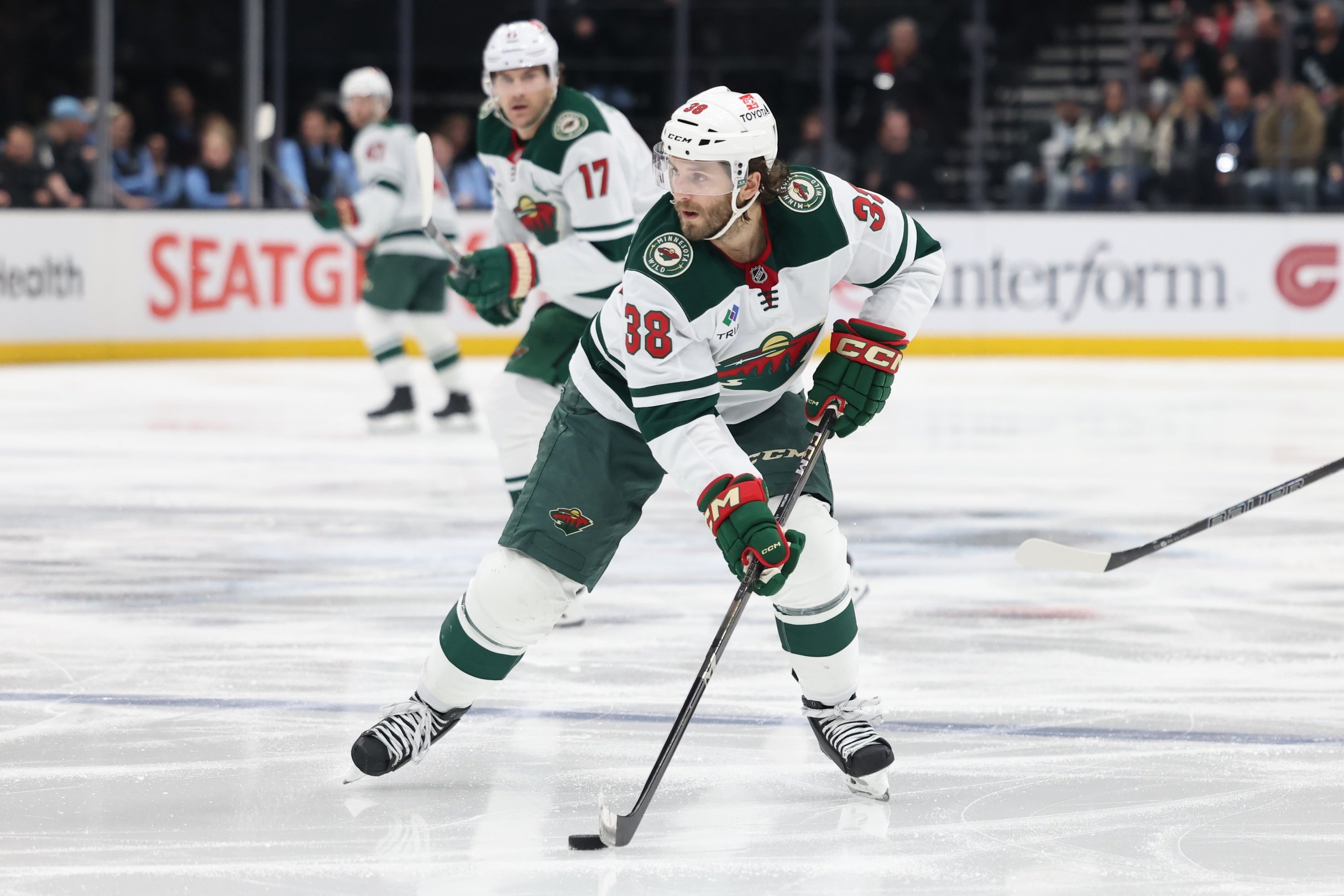 Fair or not, Ryan Hartman was tied to a few of his peers last summer in the short term. That happens when your general manager extends you and two of your teammates within weeks of each other with another year remaining on each contract. Guerin extended Hartman, Mats Zuccarello, and Marcus Foligno to the consternation of many in the fan base last fall just before the start of the season. The length of those contracts and each player's age evoked various reactions of optimism and concern. The beginning of each extension looked positive, but doubts about their ability to still contribute at a high level in the latter years of each deal raised questions. Fast-forward more than a year, and Zuccarello and Foligno seem to be living up to the beginning of those extensions. Each has carved productive roles on a Wild team that surprisingly competes with the teams at the top of the Western Conference. Hartman is a former first-round pick and 30-goal scorer, but his role has been more difficult to find. It’s time for the gritty forward to identify his role on a roster suddenly filling up with forward talent here and arriving soon. When those extensions were signed, it was easy to see the roles Zuccarello and Foligno would play, even if there were concerns about their ages. Zuccarello has been tied to Kirill Kaprizov's hip since the arrival of the Russian superstar. And while he’s missed time due to a freak injury this season, when healthy, he’s certainly lived up to that expectation, recording 17 points in 19 games and maintaining his status as the lead running mate for Kaprizov. While Foligno hasn’t contributed to the scoresheet in his age-33 season, his defensive prowess in a shutdown role has been instrumental in allowing the Wild to regain their identity as one of the stingiest teams in the NHL. Hartman was supposed to be the Swiss Army knife among the forward group. His 65 points in the 2021-22 campaign in a first-line role showed he could play alongside the Wild’s most skilled forwards when needed. When the Wild moved him around the lineup as other skilled, natural centers either arrived (Marco Rossi) or developed (Joel Eriksson Ek) in the next two seasons, he still showed he could produce in various roles. In his last three seasons, Hartman has averaged an 82-game pace of 26 goals, 30 assists, and 56 points. It’s the sort of player type every contending team needs as they navigate a long season of injuries and adversity. But this year has been a struggle for Hartman. With Kaprizov, Rossi, and Matt Boldy's continued ascension leading the way offensively for the Wild, Hartman has struggled to find an offensive role. His seven points trail more defensively inclined forwards such as Foligno, Marcus Johansson, and even Frédérick Gaudreau. But it’s more than the lack of offense that has been concerning for Hartman this season. In a year where he isn’t producing on the score sheet at even strength, he isn’t making much impact in other areas. Hartman has a single point on the power play as his role has diminished primarily to the second unit. He also hasn’t logged a single minute on the penalty kill, which has been a weakness for the Wild this season. Even if Hartman can find a way to start contributing more this year, with the impending arrival of offensive talent such as Liam Ohgren and Danila Yurov, one must wonder what exactly Hartman’s role will be on a Wild team expecting to truly compete in the final two years of this $4 million AAV extension. The Wild need Hartman to find that role now. And fast. For a guy the Wild have lauded as a crucial glue piece among the roster, the type of gritty forward who can play anywhere in the lineup, Hartman hasn’t shown that this season. His offense has slowed down, but his defensive effort at times has also been severely lacking. Hartman stood out in all the wrong ways in their blowout loss to the defending Stanley Cup Champions on home ice last Monday. On Matthew Tkachuk’s late tally in the second period to give Florida a two-goal lead, Hartman’s uninspiring backcheck left one of the league’s most dangerous forwards wide open on the back door for a tap-in goal. It's a play that perfectly encapsulates the role Hartman must embrace as the Wild’s roster continues to improve around him. The titled “gritty winger” needs to take that role head-on and start excelling in it to fit in Minnesota's future. As Yurov and Ohgren make their way on the Wild, Hartman will be cemented even more to the third line with limited powerplay time. Sure, his value will still be in his ability to elevate into the top-six should injuries occur, but his everyday role needs to shift to being a strong defense-first forward who can provide offensive pop from the bottom-six. Plays like the one in the clip above simply can’t happen for a player whose offensive output is slowing down. Whether it be his inexplicable step up in the neutral zone to create that odd-man rush or the lack of a backcheck that followed, it can’t happen. Hartman must become a defensively reliable forward in his new role. Furthermore, the Wild desperately need a shakeup on their penalty-kill deployment. Minnesota's pitiful penalty kill has been the worst-kept secret in the NHL for a few years. Oddly, Hartman has yet to log a single minute shorthanded this season. That’s not his fault, as the Wild have attempted to rely upon other options, such as Foligno, Yakov Trenin, and Eriksson Ek, to fill those minutes. However, the Wild have also acknowledged the importance of placing offensive-minded forwards on the penalty kill this year. This summer, John Hynes voiced his desire to have Boldy step up in such a role. He referenced how some of the best units in the league deployed offensive-minded forwards there because of their instincts about what an opposing powerplay is attempting to create. For a guy who has seen a large chunk of powerplay time in his career and whose man-advantage minutes have diminished this season, it seems to be a perfect opportunity for Hartman to turn himself into a key penalty killer for the Wild. It could be a move to help save a unit that is quickly torpedoing any chance they have at competing in the playoffs this season. Regardless of what the Wild choose to do this year, Hartman must step up and lean into a new role. He needs to become the true Swiss Army knife the Wild were expecting when they extended him to become a part of their window of competition. It might not be the role Hartman has enjoyed in the past. Still, it’s what’s needed for him to become the “glue guy” the Wild envisioned him to become.
 -
 View full article
 -

Hynes Is Establishing Minnesota's "Second Effort" Identity
Justin Hein posted an article in Minnesota Wild
.jpg.1b886a6d0d46dd11c091362234ef681c.jpg) John Hynes is seeking to send a message with his “second effort” catchphrase. Evidence is mounting that “second effort” was the theme of training camp. Hynes credited that for their 6-1 victory in the preseason finale. “The league is a second-effort league,” he explained. “That’s something we’ve emphasized in the style of practices.” Before that post-game interview, Michael Russo reported in a recent podcast that second effort has been a theme in training camp, and he even used the “second effort league” phrasing. Russo believes that’s the reason for all of the battle drills in camp. Those drills are typically reserved for teams coming off a bad loss or young teams whose coach wants to set a tone. However, this is unusual for a veteran roster like Minnesota’s. Missing last year’s playoffs was a huge disappointment, even if you blame it on injuries. The players will be more receptive to a culture shift coming off of that failure -- perhaps more receptive than they would be at any other time. That puts the Wild at a crossroads this season. It seems like you could say that about every team in any given year. However, owner Craig Leipold publicly stated that the Wild are focused on a championship in the next four seasons. That mandate from the top should have the attention of every player on the roster. The youth movement already taking shape on the team will further emphasize that. Liam Ohgren, Marat Khusnutdinov, and Jesper Wallstedt made the opening night roster, and defensemen Daemon Hunt and Zeev Buium could push for roster spots by the end of the year. Those players should push the older players to keep hold of their spots, and buying into Hynes’s messaging won’t be optional with that additional pressure. Hynes couldn’t have picked a better time to set a team identity. It’s coaching genius. Along with the great timing, this is a natural progression for a team whose franchise is synonymous with defense-first hockey. The same personal principles apply to “second effort” as they did under that structured identity of the past. The Wild have taken pride in hard plays in the corners and at the net in the past. They don’t have to tear down the bones of an old culture to establish this new culture. Instead, Hynes can build off of what was already established. So why the change? Nobody can answer that question besides Hynes, and that’s probably not an answer he’d give publicly. NHL coaches generally keep this type of thing inside the walls of the locker room. However, to hazard a guess, it may have something to do with Minnesota’s lackluster offensive performance. Last season, Minnesota ranked 23rd in five-on-five goals per minute. That wasn’t just a product of poor shooting, either. Their expected goals (xG) ranked 25th in the league. Expected goals is an analytical measure of all of a team’s chances. It’s intended to reward teams for generating more dangerous shots close to the net. That could be the key to this new messaging: Take a team that takes pride in the dirty work and point that toward the other team’s net. “Second Effort” applies in all three zones, not just the defensive structure. That’s also a great fit for the personnel on Hynes’s roster. The team’s leaders do their best work in front of the net, especially Joel Eriksson Ek and Marcus Foligno. Jared Spurgeon loves to use his lower body strength in those second-effort areas, such as the defensive zone corners and along the boards. It also fits the scrappy playstyle of key role players like Ryan Hartman and Jake Middleton, players who need to have bounce-back years for the team to make the playoffs. New arrival Yakov Trenin is in the same mold. And, speaking of big years, Marco Rossi is primed for another leap after an intense offseason and a chance to center Kirill Kaprizov. Rossi may not be the first name that comes to mind, but he also has a way of getting to the offensive net-front. Kirill Kaprizov will also back up all of this. Kaprizov’s leadership style was documented last year at The Athletic. Russo explained, “As Foligno has put it, Kaprizov has the skills of a superstar and the work ethic of a fourth-liner.” Kaprizov tends to lead by example, and this second-effort identity is a natural fit for him. If Hynes hopes to nudge Kaprizov toward captaincy, it makes sense to build the team identity around their superstar’s playstyle. This seems primed to work. Hynes has the players to make it work, and they should be a captive audience after last season’s disappointing ending. It fits what the team has done in the past, and it’s a great vision for their future. If all this leads the Wild to better scoring, it’s a coaching success. If that happens after the offseason did very little to address the team’s middle-six scoring, it’s a master stroke.
John Hynes is seeking to send a message with his “second effort” catchphrase. Evidence is mounting that “second effort” was the theme of training camp. Hynes credited that for their 6-1 victory in the preseason finale. “The league is a second-effort league,” he explained. “That’s something we’ve emphasized in the style of practices.” Before that post-game interview, Michael Russo reported in a recent podcast that second effort has been a theme in training camp, and he even used the “second effort league” phrasing. Russo believes that’s the reason for all of the battle drills in camp. Those drills are typically reserved for teams coming off a bad loss or young teams whose coach wants to set a tone. However, this is unusual for a veteran roster like Minnesota’s. Missing last year’s playoffs was a huge disappointment, even if you blame it on injuries. The players will be more receptive to a culture shift coming off of that failure -- perhaps more receptive than they would be at any other time. That puts the Wild at a crossroads this season. It seems like you could say that about every team in any given year. However, owner Craig Leipold publicly stated that the Wild are focused on a championship in the next four seasons. That mandate from the top should have the attention of every player on the roster. The youth movement already taking shape on the team will further emphasize that. Liam Ohgren, Marat Khusnutdinov, and Jesper Wallstedt made the opening night roster, and defensemen Daemon Hunt and Zeev Buium could push for roster spots by the end of the year. Those players should push the older players to keep hold of their spots, and buying into Hynes’s messaging won’t be optional with that additional pressure. Hynes couldn’t have picked a better time to set a team identity. It’s coaching genius. Along with the great timing, this is a natural progression for a team whose franchise is synonymous with defense-first hockey. The same personal principles apply to “second effort” as they did under that structured identity of the past. The Wild have taken pride in hard plays in the corners and at the net in the past. They don’t have to tear down the bones of an old culture to establish this new culture. Instead, Hynes can build off of what was already established. So why the change? Nobody can answer that question besides Hynes, and that’s probably not an answer he’d give publicly. NHL coaches generally keep this type of thing inside the walls of the locker room. However, to hazard a guess, it may have something to do with Minnesota’s lackluster offensive performance. Last season, Minnesota ranked 23rd in five-on-five goals per minute. That wasn’t just a product of poor shooting, either. Their expected goals (xG) ranked 25th in the league. Expected goals is an analytical measure of all of a team’s chances. It’s intended to reward teams for generating more dangerous shots close to the net. That could be the key to this new messaging: Take a team that takes pride in the dirty work and point that toward the other team’s net. “Second Effort” applies in all three zones, not just the defensive structure. That’s also a great fit for the personnel on Hynes’s roster. The team’s leaders do their best work in front of the net, especially Joel Eriksson Ek and Marcus Foligno. Jared Spurgeon loves to use his lower body strength in those second-effort areas, such as the defensive zone corners and along the boards. It also fits the scrappy playstyle of key role players like Ryan Hartman and Jake Middleton, players who need to have bounce-back years for the team to make the playoffs. New arrival Yakov Trenin is in the same mold. And, speaking of big years, Marco Rossi is primed for another leap after an intense offseason and a chance to center Kirill Kaprizov. Rossi may not be the first name that comes to mind, but he also has a way of getting to the offensive net-front. Kirill Kaprizov will also back up all of this. Kaprizov’s leadership style was documented last year at The Athletic. Russo explained, “As Foligno has put it, Kaprizov has the skills of a superstar and the work ethic of a fourth-liner.” Kaprizov tends to lead by example, and this second-effort identity is a natural fit for him. If Hynes hopes to nudge Kaprizov toward captaincy, it makes sense to build the team identity around their superstar’s playstyle. This seems primed to work. Hynes has the players to make it work, and they should be a captive audience after last season’s disappointing ending. It fits what the team has done in the past, and it’s a great vision for their future. If all this leads the Wild to better scoring, it’s a coaching success. If that happens after the offseason did very little to address the team’s middle-six scoring, it’s a master stroke.- 3 comments
-
- 2
-
-
- minnesota wild
- nhl
- (and 1 more)
-
Article: The Wild Need A Malkin And Letang To Truly Contend
mnfaninnc replied to Tom Schreier's topic in Minnesota Wild Talk
What is the criteria for an elite center? For instance, was Bergeron an elite center and what made him elite? How about Kopitar? O'Reilly? If our center corps is not elite at point getting, but elite in a 200' game, would that count? How much improvement must Rossi make to get to that level? I already think that Eriksson Ek has reached his potential, but it is obvious that you and many others do not consider him elite. At some point, the same needs to happen with Yurov, though he is too young to put on this list. If we were going to trade for a center, something many are clamoring for, I would suggest that our identity lies in a 200' game. Who are the most eligible 200' centers that could fulfill that? I would guess that Crosby has evolved into that as he has paid attention to his own end over the past 7 years. Would that be our best target? How much time would we get with him? Are there any others to be considered? I know I'd rather have some youth legs on that list. -
 The two best things going for the Gustavsson contract are both optics...it won't look bad because it was preceded by a terrible deal (Doobie), and it runs parallel to another terrible deal (Kap). So for a year or two, the overpay of Gus will look ok thanks Doob's deal, and just about the time his contract starts to feel like ancient history the Guerin regime's collapse under the weight of the Kaprisov contract will draw attention away from the smaller problem of an aging and expensive Gus. In the end this deal will have fit the franchise identity perfectly...stay profitable by drawing fans with a few good and popular but overpaid players while failing to assemble a roster that's competitive in the playoffs.
 -
View full article
-
Boldy's "Perimeter" Identity Is Fueling His Hot Start
Justin Hein posted an article in Minnesota Wild
.jpg.d53a1dcac741e9c940a5a08a1b0eb8a0.jpg) We’ve seemingly arrived at a crossroads in Matt Boldy’s career. Gone are the days when we said He’s going to be really good. Did you know he’s only 22? Here to stay is I’m naming my firstborn son Matthew Edward. Just a few weeks ago, the Twin Cities wondered if they could get some of what Bill Guerin was drinking when he predicted the young winger would eventually score 50 goals and 50 assists in a single season. But Boldy has barely had a bad shift through a week of the season. It seems like everybody wants Boldy to be something he’s not. They see the 6-foot-3 frame and beg him to crash the net, and someday, he’ll probably develop that skill set. He’s playing his game for now, and his success is self-evident. He’s being rewarded for his play as a puck-supporter and passer and scoring in buckets. So, let’s jump in and break down the attributes that make Boldy so dominant on an NHL ice sheet. Last week, Matt Boldy kicked off the makings of a dominant season by scoring the first goal of the home opener. The play starts with Joel Eriksson Ek’s faceoff win, with a plan to have Johansson retrieve the puck while Eriksson Ek ties up the center. Eriksson Ek drives the net, and Boldy reads to see if the switch between center and right wing opens any space. Ten feet from the net, Johansson fans on the one-timer. That pass alone could have been a point for Boldy, and his soft hands are why the coaches drew this play up in the first place. Fortunately, Jonas Brodin made a great play in retrieving the loose puck. He cycles the puck to Johansson, who plays catch with Boldy. Zach Werenski (No. 😎 should probably pressure this play since he has help in the slot. Instead, he maintains position. That allows Boldy the time and space to skate into a shooting angle -- albeit an impossibly sharp angle. The idea of this play should be to shoot and hope Eriksson Ek can make a play on the rebound. Instead, Boldy sees space next to the goaltender’s earhole and makes a shot that few NHL players can pull off. Per MoneyPuck, the shot had a 1.4% chance of going in. That highlights how Boldy’s special instincts. Boldy’s play away from the puck is also impressive on this play. Note how after he looks to the rafters in despair, he sneaks across the sheet to support the cycling Swedes in the right circle. That supporting-role instinct influences Boldy’s next point of the night, where he combines with his linemates for another gorgeous passing play. The play above happens primarily because of Johansson, Eriksson Ek, and Boldy’s forechecking efforts. Johansson forces Jack Johnson (No. 3) behind the net and onto his off hand. Johansson beats him around the net, forcing a messy pass to Erik Gudbranson (No. 44). Eriksson Ek’s intense pressure means that Gudbranson only has time to clear the puck to the point, which Middleton and Boldy read as a chance to turn over the puck. Boldly is wise to stay high in the zone while his linemates pressure deep. It’s a safe way to slow down a counterattack and allows him to help Middleton create a loose puck. He eventually wins it from a streaking Adam Fantilli (No. 19), highlighting his excellent positioning. Finally, Boldy shows off his vision with a pass to Johansson rather than forcing it laterally to Eriksson Ek. The pass to Johansson takes Fantilli out of the play and forces Gudbranson to abandon Johansson so he can cover Boldy. That leaves Johansson and Eriksson Ek two-on-one against Johnson, opening Eriksson Ek for a dangerous cross-ice one-timer. After a highlight in the first and second, it would have been selfish for Boldy to leave the home crowd wanting in the third. Fret not. Boldy still had one more in the tank. For unclear reasons, Columbus was content to let the Wild man-advantage unit stand still, pass the puck, and get whatever look they wanted on this power play. Down a goal, they might have wanted to bait the Wild into shooting into a blocked lane to generate a short-handed counterattack. That could explain why Boldy fakes a one-timer from prime real estate. It draws three Blue Jackets towards him, leaving Zuccarello and Eriksson Ek two-on-one at the net. The Norwegian winger tries a slap pass to his center, looking for a tip. Jack Johnson politely saves Eriksson Ek the trouble, redirecting it through his goaltender’s five-hole. Boldy made one gorgeous play every 20 minutes on opening night. He displayed his offensive vision, forechecking instinct, and elite shot. On Saturday, Boldy went the entire first period without points against the Seattle Kraken. However, he got back on track early in the second. Boldy is an underrated catalyst for Minnesota’s power play. His first full-time season was 2022-23, and the team made him a focal point of the power play from training camp that year. Boldy’s size, hands, and shot give him a unique power play toolkit that allows him to play any of the four forward positions: net front, bumper, passer, or shooter. Boldy fully displayed his versatility in his goal against Seattle. After a night of peripheral mastery against Columbus, dishing pucks and picking corners, Boldy drives the net for his second goal of the season. Boldy made every type of play in Week 1. Below is a simple play to drive into the high slot and shoot hard -- and boy, does he ever. Joey Daccord reads Boldy’s body language and gets a piece of the shot, but not enough to stop it. This one only had a 5.3% chance of scoring, which is another testament to the power Boldy put behind this wrister. Interestingly, this shot comes from the same spot as his power play assist. Even more impressive is the one key difference between the two plays. While Seattle’s weak-side defenseman stepped into Kaprizov’s shooting lane, Columbus’s weak-side defenseman covered Eriksson Ek, leaving Zuccarello open. Now, the masterpiece. Want more evidence that Boldy’s vision is on another level? Here you go: The poke check knocks Boldy off-balance, but he drifts high and reads the dump-in play. Before Johansson generates a loose puck, Boldy is already on the spot and ready to grab it. He sends a backhand pass behind his back to the right-handed Ryan Hartman -- notably the opposite hand of Boldy’s usual centerman, Joel Eriksson Ek. Boldy’s pass threads perfectly through the two Kraken defenders and perfectly onto Hartman’s forehand. Wide open between the hash marks, it doesn’t get much easier than that, and Hartman buries it. Boldy isn’t straying from his play style. He’s driving the net to shoot but not battling in the way Eriksson Ek or Foligno might. For a 6-foot-3 forward, it’s a relatively peripheral play style, just like last year. The biggest difference is his confidence level in those drives, reminiscent of Kevin Fiala. For example, take the turnover just before Hartman’s goal. Boldy makes a greedy move into the slot because he wants a better opportunity and knows he can get there. Even though he turns that over, Boldy returns to what worked for him before when he passes through two opponents to Hartman in the slot. Players as good as Boldy are often rewarded for that greedy play, especially since he’s kept his head up to pass out of those plays if he doesn't get the look he wants. His power-play assist to Zuccarello is a testament to that vision. Combining that confidence with his natural talents has taken Boldy to another level. He doesn't have to take abuse at the net front, which has led to injuries for players like Eriksson Ek, Folingo, and Zach Parise. It’s hard to criticize his play style as one-dimensional when he’s already so effective on the forecheck. Buckle up, Wild fans. Matt Boldy’s 2024-25 campaign already seems like the start of something special.
We’ve seemingly arrived at a crossroads in Matt Boldy’s career. Gone are the days when we said He’s going to be really good. Did you know he’s only 22? Here to stay is I’m naming my firstborn son Matthew Edward. Just a few weeks ago, the Twin Cities wondered if they could get some of what Bill Guerin was drinking when he predicted the young winger would eventually score 50 goals and 50 assists in a single season. But Boldy has barely had a bad shift through a week of the season. It seems like everybody wants Boldy to be something he’s not. They see the 6-foot-3 frame and beg him to crash the net, and someday, he’ll probably develop that skill set. He’s playing his game for now, and his success is self-evident. He’s being rewarded for his play as a puck-supporter and passer and scoring in buckets. So, let’s jump in and break down the attributes that make Boldy so dominant on an NHL ice sheet. Last week, Matt Boldy kicked off the makings of a dominant season by scoring the first goal of the home opener. The play starts with Joel Eriksson Ek’s faceoff win, with a plan to have Johansson retrieve the puck while Eriksson Ek ties up the center. Eriksson Ek drives the net, and Boldy reads to see if the switch between center and right wing opens any space. Ten feet from the net, Johansson fans on the one-timer. That pass alone could have been a point for Boldy, and his soft hands are why the coaches drew this play up in the first place. Fortunately, Jonas Brodin made a great play in retrieving the loose puck. He cycles the puck to Johansson, who plays catch with Boldy. Zach Werenski (No. 😎 should probably pressure this play since he has help in the slot. Instead, he maintains position. That allows Boldy the time and space to skate into a shooting angle -- albeit an impossibly sharp angle. The idea of this play should be to shoot and hope Eriksson Ek can make a play on the rebound. Instead, Boldy sees space next to the goaltender’s earhole and makes a shot that few NHL players can pull off. Per MoneyPuck, the shot had a 1.4% chance of going in. That highlights how Boldy’s special instincts. Boldy’s play away from the puck is also impressive on this play. Note how after he looks to the rafters in despair, he sneaks across the sheet to support the cycling Swedes in the right circle. That supporting-role instinct influences Boldy’s next point of the night, where he combines with his linemates for another gorgeous passing play. The play above happens primarily because of Johansson, Eriksson Ek, and Boldy’s forechecking efforts. Johansson forces Jack Johnson (No. 3) behind the net and onto his off hand. Johansson beats him around the net, forcing a messy pass to Erik Gudbranson (No. 44). Eriksson Ek’s intense pressure means that Gudbranson only has time to clear the puck to the point, which Middleton and Boldy read as a chance to turn over the puck. Boldly is wise to stay high in the zone while his linemates pressure deep. It’s a safe way to slow down a counterattack and allows him to help Middleton create a loose puck. He eventually wins it from a streaking Adam Fantilli (No. 19), highlighting his excellent positioning. Finally, Boldy shows off his vision with a pass to Johansson rather than forcing it laterally to Eriksson Ek. The pass to Johansson takes Fantilli out of the play and forces Gudbranson to abandon Johansson so he can cover Boldy. That leaves Johansson and Eriksson Ek two-on-one against Johnson, opening Eriksson Ek for a dangerous cross-ice one-timer. After a highlight in the first and second, it would have been selfish for Boldy to leave the home crowd wanting in the third. Fret not. Boldy still had one more in the tank. For unclear reasons, Columbus was content to let the Wild man-advantage unit stand still, pass the puck, and get whatever look they wanted on this power play. Down a goal, they might have wanted to bait the Wild into shooting into a blocked lane to generate a short-handed counterattack. That could explain why Boldy fakes a one-timer from prime real estate. It draws three Blue Jackets towards him, leaving Zuccarello and Eriksson Ek two-on-one at the net. The Norwegian winger tries a slap pass to his center, looking for a tip. Jack Johnson politely saves Eriksson Ek the trouble, redirecting it through his goaltender’s five-hole. Boldy made one gorgeous play every 20 minutes on opening night. He displayed his offensive vision, forechecking instinct, and elite shot. On Saturday, Boldy went the entire first period without points against the Seattle Kraken. However, he got back on track early in the second. Boldy is an underrated catalyst for Minnesota’s power play. His first full-time season was 2022-23, and the team made him a focal point of the power play from training camp that year. Boldy’s size, hands, and shot give him a unique power play toolkit that allows him to play any of the four forward positions: net front, bumper, passer, or shooter. Boldy fully displayed his versatility in his goal against Seattle. After a night of peripheral mastery against Columbus, dishing pucks and picking corners, Boldy drives the net for his second goal of the season. Boldy made every type of play in Week 1. Below is a simple play to drive into the high slot and shoot hard -- and boy, does he ever. Joey Daccord reads Boldy’s body language and gets a piece of the shot, but not enough to stop it. This one only had a 5.3% chance of scoring, which is another testament to the power Boldy put behind this wrister. Interestingly, this shot comes from the same spot as his power play assist. Even more impressive is the one key difference between the two plays. While Seattle’s weak-side defenseman stepped into Kaprizov’s shooting lane, Columbus’s weak-side defenseman covered Eriksson Ek, leaving Zuccarello open. Now, the masterpiece. Want more evidence that Boldy’s vision is on another level? Here you go: The poke check knocks Boldy off-balance, but he drifts high and reads the dump-in play. Before Johansson generates a loose puck, Boldy is already on the spot and ready to grab it. He sends a backhand pass behind his back to the right-handed Ryan Hartman -- notably the opposite hand of Boldy’s usual centerman, Joel Eriksson Ek. Boldy’s pass threads perfectly through the two Kraken defenders and perfectly onto Hartman’s forehand. Wide open between the hash marks, it doesn’t get much easier than that, and Hartman buries it. Boldy isn’t straying from his play style. He’s driving the net to shoot but not battling in the way Eriksson Ek or Foligno might. For a 6-foot-3 forward, it’s a relatively peripheral play style, just like last year. The biggest difference is his confidence level in those drives, reminiscent of Kevin Fiala. For example, take the turnover just before Hartman’s goal. Boldy makes a greedy move into the slot because he wants a better opportunity and knows he can get there. Even though he turns that over, Boldy returns to what worked for him before when he passes through two opponents to Hartman in the slot. Players as good as Boldy are often rewarded for that greedy play, especially since he’s kept his head up to pass out of those plays if he doesn't get the look he wants. His power-play assist to Zuccarello is a testament to that vision. Combining that confidence with his natural talents has taken Boldy to another level. He doesn't have to take abuse at the net front, which has led to injuries for players like Eriksson Ek, Folingo, and Zach Parise. It’s hard to criticize his play style as one-dimensional when he’s already so effective on the forecheck. Buckle up, Wild fans. Matt Boldy’s 2024-25 campaign already seems like the start of something special.- 3 comments
-
- 5
-
-
- minnesota wild
- nhl
- (and 1 more)
-
View full article