





By Eric Forga -
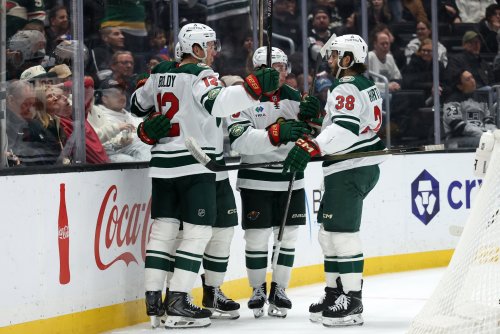
With their fourth game in six days on the second night of a back-to-back, against two of the NHL’s most talented teams, the Minnesota Wild got off to a bit of a sluggish start against the league-leading Colorado Avalanche, which isn’t much of a surprise considering they were on the second game of a back-to-back, and going up against the best team in the league. It was the first time they had looked completely overmatched since the Quinn Hughes trade, and the Wild’s first loss in their last eight games.
The Wild have built a team with strong veteran role players and emerging young talent, and they’re consistently winning in one of hockey's toughest divisions and on a nightly basis against the best teams in the NHL. If you look at the numbers, the Wild hold the third-best record in the NHL; they would be leading every division except their own.
Unfortunately, the current NHL playoff structure does not place much emphasis on overall performance. Instead, it rewards geographical placement over league-wide merit. This is why, despite their stellar record, the Wild could immediately face a gauntlet against the Colorado Avalanche or Dallas Stars, the teams with the best record in the Western Conference. It isn’t just bad luck; the league has built it into the playoff structure.
In 2014, the NHL adopted a divisional playoff format designed to highlight regional rivalries and reduce travel costs. The idea was straightforward: make the early rounds more exhilarating by ensuring hated division rivals face each other immediately. Under this structure, the top three teams in each division automatically qualify, while two additional teams from each conference get “wild card” spots based on points.
This isn’t the first time the Wild or other teams have been on the wrong side of this structure. In 2018, the Pittsburgh Penguins and the Washington Capitals finished the season near the top of the NHL standings but faced each other in the second round because of divisional seeding. One team had to go home early despite ranking among the league's elite. Meanwhile, a team with nearly ten fewer points went deeper because of a more favorable path.
Fans and analysts have debated this issue for years, suggesting alternatives like reverting to the classic one-through-eight conference seeding, where the best team faces the lowest, the second-best faces the second-lowest, and so on. That system rewards teams' regular-season consistency and doesn’t punish elite teams for their geography.
Under this playoff format, Minnesota’s likely first-round opponent would be a wild-card team barely eking into the playoffs – not a top-three contender. Better hockey teams would have better odds of showcasing their talent longer, giving fans across the league higher-quality late-round matchups.
Revising the playoffs wouldn’t be easy. The NHL values rivalries and television-friendly matchups, and the current format guarantees those storylines early. But the downside is how Wild fans are feeling currently. A system where hard work and great hockey don’t always translate to meaningful advantage.
One compromise could be to keep division-focused seeding for regular-season scheduling, but return to pure conference-based seeding once the playoffs begin. That way, the rivalries the NHL covets still get the spotlight, but the postseason rewards excellence across the league, not just within geographical boundaries.
Another proposal often discussed among analysts is the crossover format, in which if the fourth-place team in one division has more points than the third-place team in another, it takes their playoff spot. This idea preserves divisional races while preventing elite teams from being punished for playing in tough divisions.
Wild fans are not asking for an easy road through the playoffs, just a fair one. Minnesota’s roster, which was built through patience, precision trades, and scouting, has earned its way into the conversation with hockey’s best. We have watched this group develop chemistry and resilience against some of the sport’s most formidable opponents. When a team that ranks in the top three of the entire NHL has to open against another top-five squad because of where they’ve drawn divisional lines, something just doesn’t feel right.
It's time for the league to take a closer look at how playoff alignment affects competitive balance. The Wild’s success should be celebrated, not punished. If the league truly wants to see its best teams competing deep into spring, it might be time to replace “rivalry-driven” drama with a system that prioritizes fairness and gives deserving teams like the Wild the chance to prove how far their talent can take them.
Think you could write a story like this? Hockey Wilderness wants you to develop your voice, find an audience, and we'll pay you to do it. Just fill out this form.
-
 2
2


Recommended Comments
Join the conversation
You can post now and register later. If you have an account, sign in now to post with your account.
Note: Your post will require moderator approval before it will be visible.