




By Eric Forga -
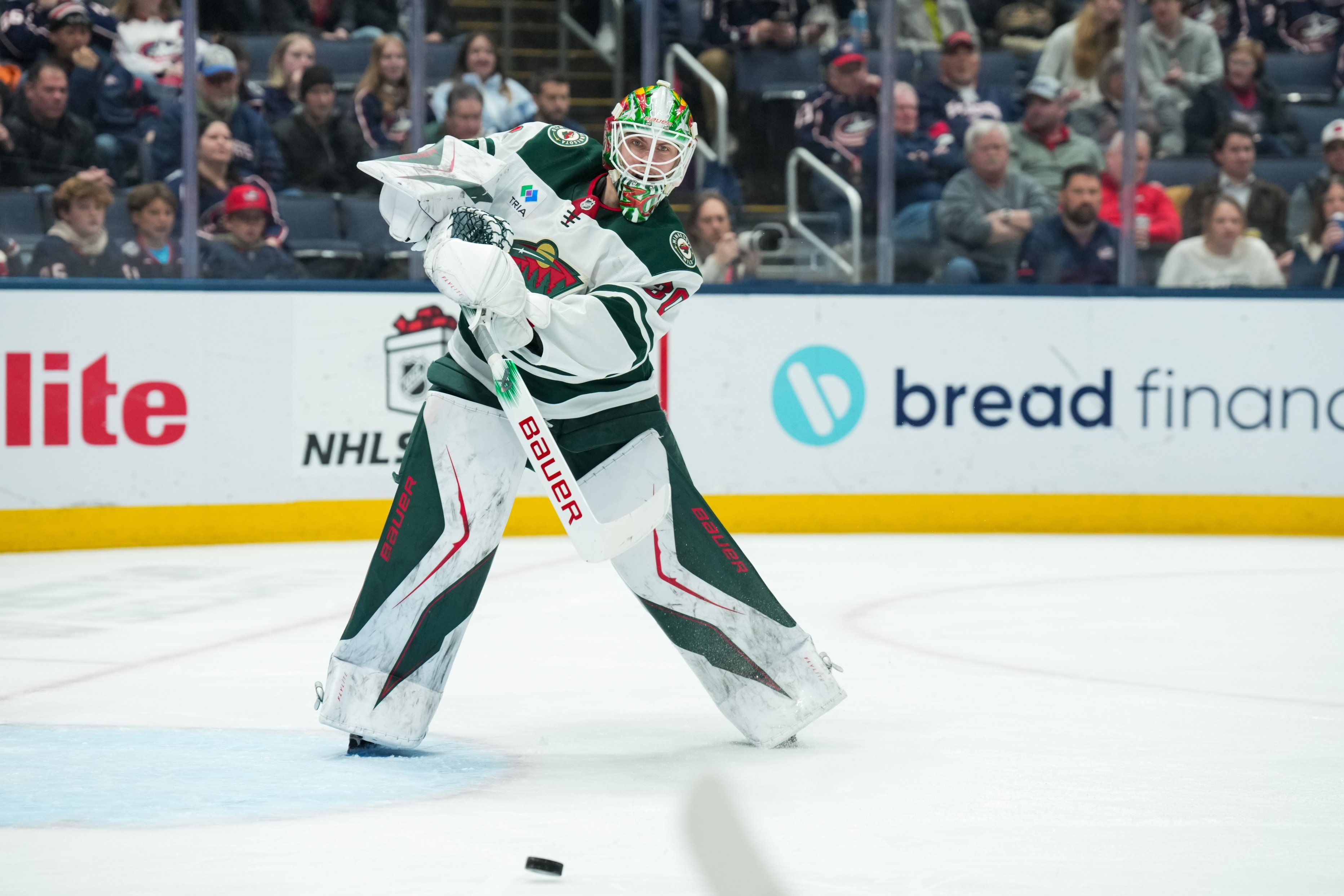
The Minnesota Wild’s goaltenders have quietly become a big part of how the Wild get out of their zone cleanly, generate rush chances, and protect their own blue line. It’s all about how they handle the puck.
Yesterday's overtime game against the Buffalo Sabres was a perfect example. Gustavsson sent a perfect pass while Buffalo was changing lines up ice, and as Kirill Kaprizov was breaking into Buffalo’s zone. Kaprizov sent over a nice pass to Mats Zuccarello, who buried the puck to give the Wild the win off of an assist by Gustavsson’s pass.
Minnesota’s reads on dump-ins, their willingness to move the puck, and decisions on when to freeze or keep play going are directly shaping both the offense and the defensive identity of this team.
The Wild have leaned into an identity built around strong, structured team defense backed by high-end goaltending, and puckhandling is one of the tools that makes that possible. With Filip Gustavsson and Jesper Wallstedt stabilizing the Wild, they have been able to play a low-event, defensively sound style without completely sacrificing transition offense. Even in stretches where Minnesota gives up more chances than it would like, the goalie's management of the puck has helped keep the team’s expected goals against from turning into actual damage.
Puckhandling Minnesota’s goalies starts with simple, repeatable plays rather than high-risk hero passes. Gustavsson is more defensively active; he doesn’t chase the puck. That mentality shows in how he comes out to stop dump-ins, settles the puck, and makes a short, safe play rather than trying to force stretch passes. Gustavsson’s willingness to be a third defenseman on retrievals lets the Wild’s D pivot up ice instead of turning their backs and eating hits below the goal line.
Wallstedt’s game complements that by being calm and efficient with his touches, usually keeping the puck moving to the weak side or to his partner instead of freezing the play. As a tandem, Gustavsson and Wallstedt reduce the chaos behind the net. They knock down hard dump-ins, and they either rim it back against pressure or set it flat for a defenseman in stride, which is exactly what Minnesota needs from the position.
Smart puck plays from the crease give the Wild a head start on offense long before they reach the neutral zone. When a goalie cleanly fields a dump-in and moves it quickly, the first forechecker is suddenly chasing from behind the puck instead of arriving on time to finish a hit, and that timing flip opens up middle-ice counters and weak-side rushes. Minnesota’s improved results when the goaltending is rolling show up even as the team still allows a fair number of chances, which underscores how critical clean exits and quick transitions have been.
Gustavsson has even literally turned defense into offense by scoring a goal, a perfect example of how comfortable he is with the puck and how the Wild encourage him to look up ice when the net is empty at the other end. Even when he is not shooting, that same confidence translates into hard, accurate clears and quick-ups that can hit a forward in motion and create odd-man rushes out of what began as simple dump-and-changes.
Defensively, good puck handling shows up in all the things that don’t happen. There are fewer extended cycles, fewer lost retrieval battles, and fewer scrambles of broken plays. By knocking down dump-ins and steering the puck to safe areas, the Wild’s goalies help their defensemen avoid getting pinned down, which reduces the time Minnesota spends stuck in its own end. Their decisions on when to freeze the puck versus keeping it moving also matter.
A well-timed hold can reset tired penalty killers or defuse a dangerous shift, while a quick play on a harmless dump can help roll lines and keep the bench fresh. Combined with strong shot-stopping numbers at five-on-five, that management has helped the Wild lead the league in even-strength save percentage over key stretches, even when they are giving up more scoring chances than an ideal defensive night.
As Wallstedt grows into a full-time NHL role, the Wild are effectively building around a tandem whose puck skills match where the league is going. Around the NHL, top goaltenders are increasingly valued not just for reflexes but for the ability to handle the puck and support breakouts, and Minnesota’s pair fits that modern model.
For a team that wants to be defensively structured but still opportunistic in transition, every clean touch from the crease is a small but significant contribution to both offense and defense, and the Wild’s goaltenders are turning those small plays into a big part of the team's identity.
Think you could write a story like this? Hockey Wilderness wants you to develop your voice, find an audience, and we'll pay you to do it. Just fill out this form.



Recommended Comments
There are no comments to display.
Join the conversation
You can post now and register later. If you have an account, sign in now to post with your account.
Note: Your post will require moderator approval before it will be visible.