




By Eric Forga -
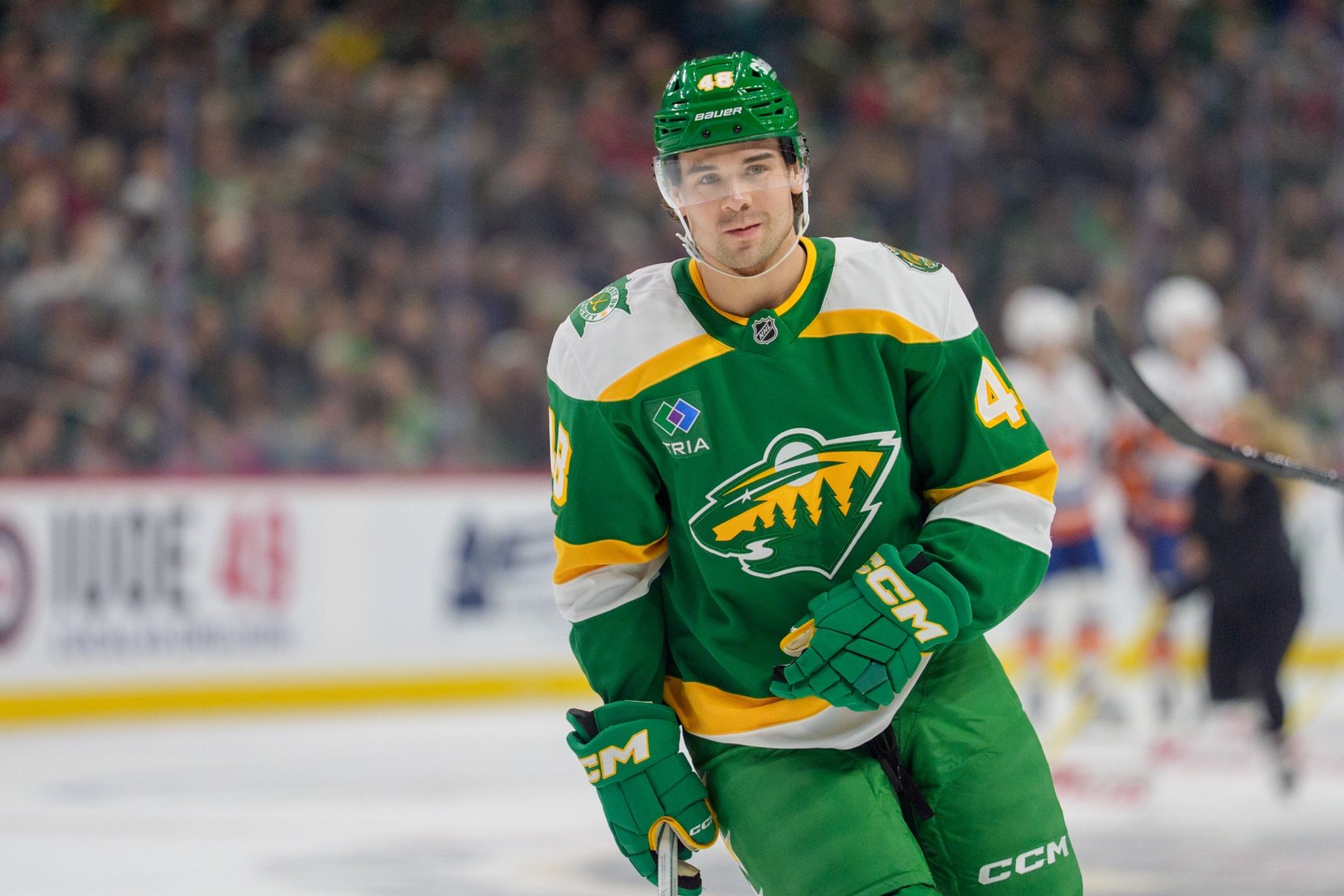
Daemon Hunt has earned the right to start over David Jiricek for the Minnesota Wild because his current form, underlying profile, and fit with the team’s needs all point in the same direction. He helps them win right now in ways Jiricek has not yet consistently shown at the NHL level.
Recent usage and transactions already hint at how the organization views both defensemen. Hunt has stepped into the Wild lineup this season, contributing two assists, 11 hits, 19 blocked shots, and a plus -3 rating in 13 games, while handling a depth role without the chaos that usually comes with a young defender learning on the job. Jiricek, meanwhile, has been sent down after a stint that featured decent minutes but little impact on the scoresheet and no offensive production in his first 10 to 12 games with Minnesota.
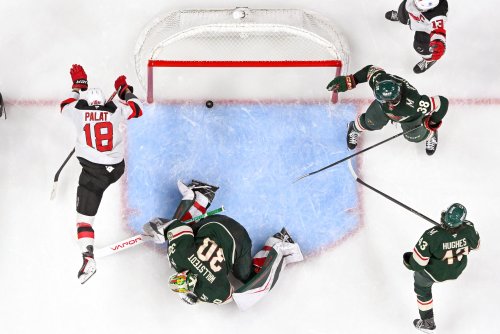
Hunt’s offensive upside showed up last night against the Islanders in a tied 2-2 game. Quinn Hughes slid a pass down the left side to Hunt, who went cross-ice through the crease to Kaprizov, who slid the puck past Sorokin to take a 3-2 lead in the game. It was a beautiful tape-to-tape pass. If he can consistently make plays like this, he’s going to continue to earn himself more ice time with the Wild.
That contrast matters for a team that cannot afford extended on-the-job training in the middle of a playoff race. Hunt's ability to come in cold and still tilt the basic results in the right direction gives the coaching staff a baseline of trust that Jiricek has not yet matched in a Wild sweater.
Going back to his WHL and early pro days, Hunt's strength has been his smooth, powerful skating, paired with calm puck movement and solid defensive reads. Scouting reports consistently highlight his mobility, vision, and poise under pressure, describing him as an all-around blueliner who can move the puck efficiently and close plays with his stick and body positioning rather than desperation.
For a Wild team that already leans heavily on high-end puck movers like Quinn Hughes and Jonas Brodin, a low-maintenance depth defender who can keep plays on schedule and avoid self-inflicted damage is hugely valuable. Hunt’s profile fits that template. He can advance the puck, survive forechecks, and eat defensive-zone shifts without the wild swings in decision-making that often show up in young high-ceiling defenders.
None of this should take away from Jiricek’s potential. At 6-foot-3 and over 200 pounds, he has the size, reach, and a heavy shot that made him a top prospect, and the tools still project as a potential top-four, all-situations defender if the development curve hits.
However, during his brief run in Minnesota, he has looked more like a player trying to survive than one dictating play. He has no goals, no assists, and limited shot volume across his early games. Minnesota’s coaches are sheltering him at five-on-five and keeping him away from special teams.
The gap between tools and impact is exactly where the argument tilts toward Hunt. The Wild need reliability and mistake-free hockey from the bottom of their defense group, not a long runway for a high-variance player still figuring out reads against NHL pace. Jiricek’s ceiling is higher, but his game brings more risk than reward, and that is the opposite of what a contending lineup wants from its third pair.
Look at how the depth chart stacks up. Minnesota already has premium puck-driving on the left side with Hughes and Brodin, plus size and snarl with Jacob Middleton further down. On the right, they need cost-controlled defenders who can hold the rope behind their stars, kill plays in the neutral zone, and handle second-wave matchups without demanding heavy puck-touches or power-play time.
Hunt checks those boxes because his game scales to whatever minutes the staff gives him. He can slide next to a more offensive partner and play safety net, or pair with a stay-at-home veteran and be the one to transport the puck. Hunt’s recent usage and position-on-ice results show that he already fits within Minnesota’s current structure, which is not yet the case for Jiricek.
There is also a development argument that actually favors both players but still supports starting Hunt over Jiricek. For Hunt, consistent NHL reps on a third pair and on the penalty kill accelerate the refinement of a game that already looks close to plug-and-play, especially after bouncing between organizations and being reclaimed on waivers.
For Jiricek, big minutes and every-situation usage in the AHL (or a lower-leverage role elsewhere) are more valuable than sheltered, low-impact NHL shifts that neither build confidence nor showcase his strengths. In other words, starting Hunt helps the Wild win now, giving Jiricek the runway he needs to become the impact defender his pedigree suggests he can be.
The franchise doesn’t have to choose between upside and long-term stability. However, in the short term, the lineup card should reflect who is ready to help most on a nightly basis. Right now, that is Daemon Hunt, and the Wild’s recent roster decisions are already starting to say the quiet part out loud.
Think you could write a story like this? Hockey Wilderness wants you to develop your voice, find an audience, and we'll pay you to do it. Just fill out this form.
-
 1
1



Recommended Comments
Join the conversation
You can post now and register later. If you have an account, sign in now to post with your account.
Note: Your post will require moderator approval before it will be visible.