




By Eric Forga -
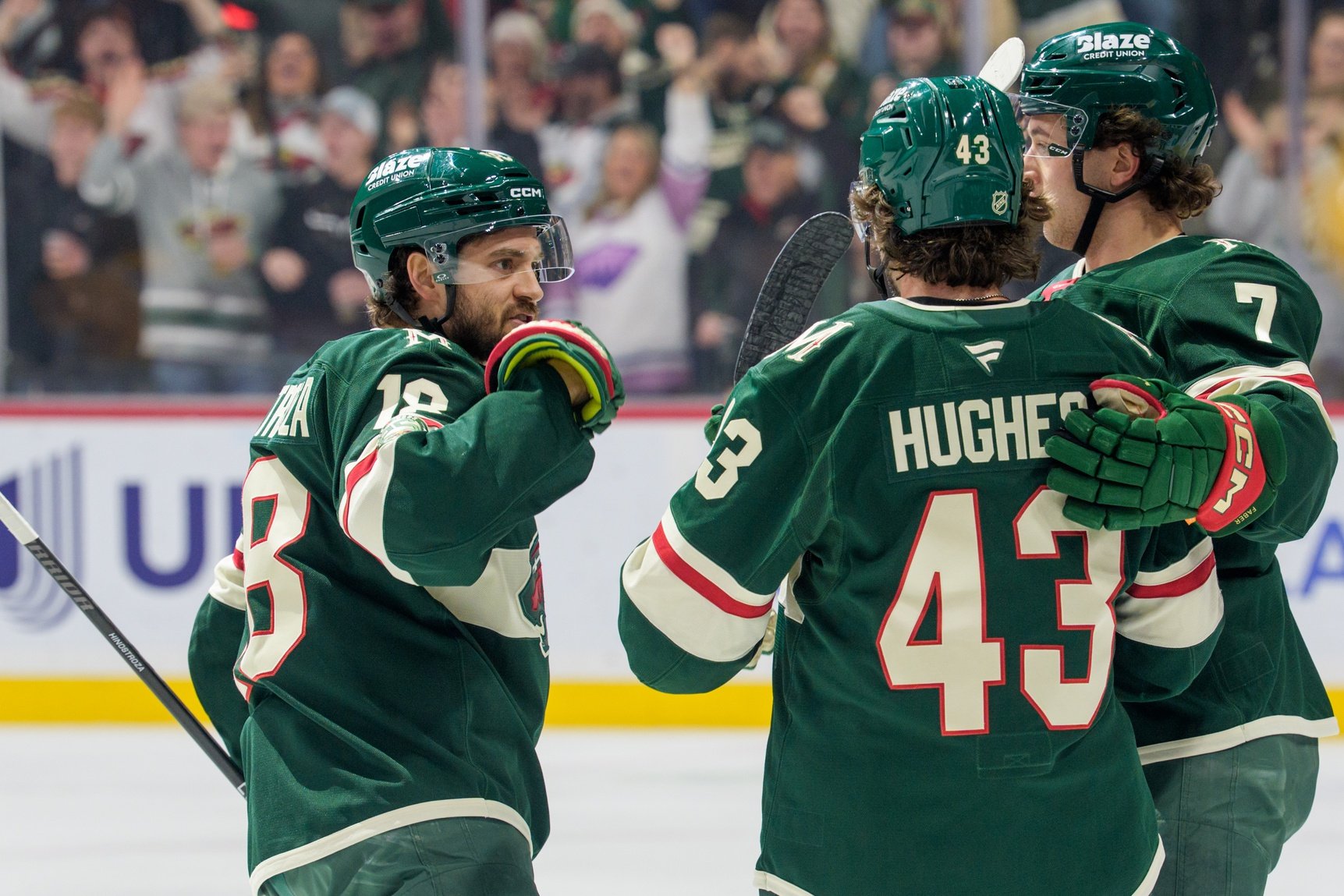
Quinn Hughes' arrival in Minnesota has been an injection of adrenaline into an already surging team. It has changed the entire team's feel. The move has signalled that the organization is done waiting around and is ready to chase something bigger right now.
The Wild didn’t make a safe middle-of-the-road trade. They pushed all their chips in, sending out a package centered on Marco Rossi, Zeev Buium, Liam Ohgren, and a future first-round pick to acquire Hughes.
That kind of price gets everyone's attention in the room. It tells players that management believes this group is close and willing to pay to put it over the top. Hughes arrived as a fully formed, elite No. 1 defenseman, not a project or might be good someday. He came with the resume of a star: huge minutes, power play quarterback, primary puck mover, and the kind of player other teams have to game plan around. For a franchise that has spent years trying to find that true cornerstone on the back end, it instantly raised the standard of what “good enough” looks like.
From his first game in a Wild sweater, Hughes looked like he belonged. He scored in his debut and immediately started driving play from the back end, turning routine breakouts into controlled rushes and giving Minnesota a different gear in transition.
The points came in short order, with Hughes adding to a season total of 30 points in 33 games and continuing to produce at roughly the same rate he had in Vancouver. The way he creates his production makes it so valuable.
Hughes doesn’t rely on hopeful point shots; he walks the blue line, pulling forecheckers out of position, and threads passes through seams that open up only because of his patience and edge work. That ability to hold the puck and wait for the right lane has turned basic offensive zone time into real pressure, forcing penalty kills and five-on-five units to stretch and respect the threat at the top of the zone.
Then there’s the workload. Hughes regularly pushes close to 29 minutes a night and has already gone past 32 minutes in a non-overtime game, essentially becoming the Wild’s metronome. When the game is getting away, he’s on the ice to settle things down. When they need a push, he's out there starting the play. Late in tight games, he’s the one taking those crucial shifts, touching the puck, and dictating tempo.
The Hughes trade hit at the perfect time for a team that was already starting to heat up. Minnesota had been rolling since early November, and Hughes stepped straight into that stretch and made it look even more convincing.
Minnesota kept stacking wins in the immediate aftermath of the deal, including a statement performance over Boston, and outscored opponents 16-4 in the first three games with him in the lineup. That kind of goal differential doesn’t happen by accident.
You can see his fingerprints all over how the Wild manages games now. Breakouts are cleaner, with fewer blind chips off the glass and fewer panic plays under pressure. Forwards are getting the puck in stride, which leads to more controlled entries and longer spells in the offensive zone. All of that adds up to less time chasing, less time stuck in their own end, and more stretches where the Wild are dictating the pace instead of reacting to it.
Defensively, Hughes has done as much to stabilize the team as he has to spark its offense. By handling the toughest matchups and the heaviest minutes, he lets the rest of the defense slide into roles that fit them better. The Wild aren’t asking second-pair guys to play like shutdown No. 1s anymore, and depth defenseman can focus on simpler, more defined responsibilities instead of being overextended.
The overall look of the Wild’s back end has changed because of that shift. There’s less scrambling, fewer extended shifts where everyone is pinned and chasing, and more sequences where Minnesota kills plays early and flips them into possession going the other way. When Hughes is on the ice, the team plays with a calm, connected posture that has been missing in earlier stretches of the season.
Off the ice, Hughes has brought a different kind of presence to the Wild’s locker room. He doesn’t need to be the loudest guy in the room. His confidence shows up in how he prepares, how steady he looks in big moments, and how comfortable he is carrying the weight of expectations.
When your top defenseman never looks rattled, it has a way of settling everyone else down as well. That influence is easy to miss on TV but impossible to ignore around the team. A quick word on the bench after a tough shift, a nudge of encouragement to a younger defenseman, the quiet “give me the puck” body language late in periods, those moments add up.
Younger players get a live example every night of what it takes to be one of the best at the position, and veterans gain a partner who shares the burden of driving the team forward. Taken together, the Hughes trade feels like a turning point for the franchise.
For years, the Wild have been good, sometimes very good, but often stuck in that middle tier where they were hard to play against without truly scaring the league's elite. Now with a star on the back end to go with their core up front, the roster finally looks like the front office built it with a deep spring run in mind. People will debate the cost in prospects for a long time, but in the short term, the wins, the goal differential, and the way this team now carries itself suggest it was the kind of bold move that can redefine an era in Minnesota.
Think you could write a story like this? Hockey Wilderness wants you to develop your voice, find an audience, and we'll pay you to do it. Just fill out this form.
-
 7
7




Recommended Comments
Join the conversation
You can post now and register later. If you have an account, sign in now to post with your account.
Note: Your post will require moderator approval before it will be visible.