




By Bekki Antonelli -
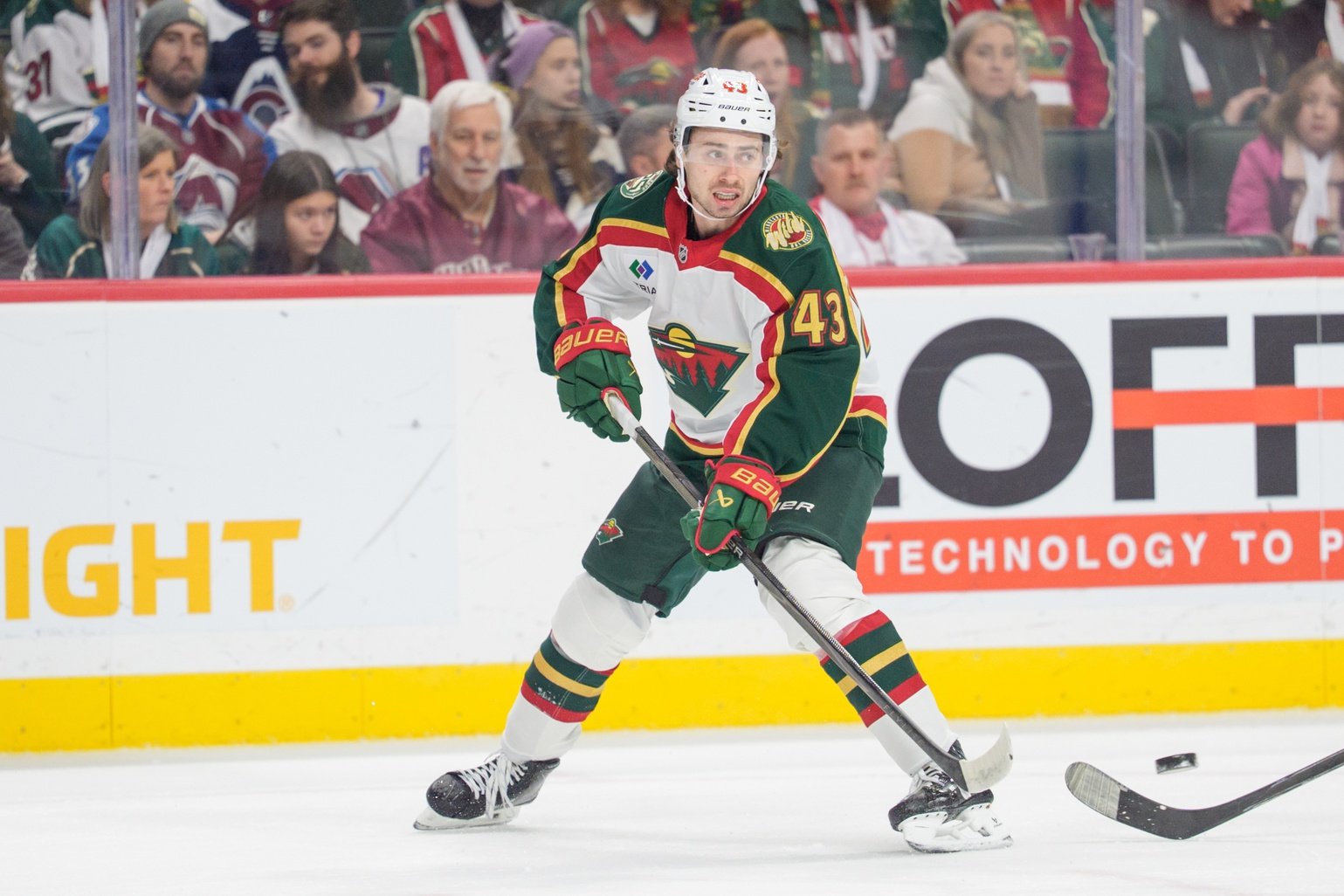
The NHL has the best players in the world, so what gives Quinn Hughes the ability to break out so much better and rank in the top 10? At any level of hockey, you need time and space to make plays, and players have almost none of that in the NHL. Hughes stands out for both his ability to create time and space and make plays without it. That’s why he ranks 1st for zone entries, zone exits, and puck possession for defensemen.
Connor McDavid stands out as the fastest player on the ice. Hughes doesn’t match the same top speed, but he has incredible edge work and stickhandling skills, and he's second in skating distance per game at 4.76 miles, only behind McDavid, who averages 4.83 miles.
The breakout starts with the defensemen, and faster, cleaner passes help reduce the time the forwards need to gain control and make the next play. Hughes always seems to be making perfect passes. Ideally, every defense would make tape-to-tape passes every time, but there are several reasons Hughes can do so while other players cannot.
At 5-foot-10, he’s on the smaller side for a defenseman, and bodying his way through players isn’t going to be as effective. He doesn’t have the stride length to move as fast as a taller player straight up the ice, but he has nearly unmatched edgework that helps him gain speed and lose opponents quickly. Curving back away from danger is one way he creates time and space for himself.
It’s also one of the reasons we rarely see Hughes make a risky pass. He’ll keep moving his feet and turning until he has a better option. However, that doesn’t mean he won’t take risks.
He goes for the dangerous, cross-ice pass, and he gets away with it. Hughes often sends the puck across a zone and a half, tape-to-tape, through defenders. Below is an example during a Vancouver Canucks game against the Florida Panthers.
Hughes’ neutral-zone stretch pass is fairly dangerous because it leaves a lot of room to get picked off, potentially leading to an odd-man rush for the other team. Most of the defensive-zone breakout passes are short and along clear paths. However, Hughes constantly picks the pass that gains the most ice, and can make a strong, cross-ice, tape-to-tape pass.
He also does an excellent job of creating an outlet for himself. During Wednesday’s game against the San Jose Sharks, Hughes picked up the puck and passed it to Kirill Kaprizov, but stayed in a spot to receive it back from Kaprizov. The Sharks immediately pressured Kaprizov, who passed it to Hughes, who then passed it back to Kaprizov once he had more space.
Hughes’ offensive mindset creates opportunities for the Minnesota Wild and helps support the forwards.
He also knows how to accentuate his strengths, and his equipment reflects that. He prioritizes speed and control to be the best at stickhandling and passing, which is clear through the flex and curve of his stick.
A stick’s flex is based on height, weight, and position. Forwards typically have a lower flex, but all-time goal-scorer Alexander Ovechkin uses a 100-flex stick. Ovechkin weighs in at 236 lbs. More importantly, his signature move is a slap shot or one-timer out front.
A stiffer stick is important to generate power on this type of shot. Alternatively, Hughes uses a lower flex, ranging from 82 to 87, which helps him release the puck quickly. In a conversation with Auston Matthews, Hughes mentioned he uses a 5 lie, specifically because he skates pretty low to the ice. Getting lower to the ice is important for his edge work. He also noted that his curve is similar to the Zegras curve, or a P86.
The P86 is a new, popular mix between the P92 and the P28 that optimizes puck control while still offering loft and quick release. Most players are going to be particular about their curve and flex, but Hughes is going to make sure every last detail is right to gain that edge.
Hughes’ reputation can also bring him time and space. Every other player in the NHL knows who he is and how good he is and reacts accordingly. Other players might play a little more defensively and take fewer risks around Hughes than they would an AHL call-up or rookie, because they don’t want to get beaten back. While this makes it harder for Hughes to beat an individual player, it gives him more time and space to move the puck across the ice.
Finally, he’s just incredible at stick handling. Hughes can get the shot off in high traffic areas and consistently thread the puck through defensemen and screens. He might lose the puck, but he’s excellent at recovering, as he does here.
Hughes excels at every aspect of the game. Still, his hockey IQ, edgework, and stickhandling make him one of the absolute best defensemen in the league. Like other great players, he dominates a couple of areas, making him a lethal threat on the ice.
Think you could write a story like this? Hockey Wilderness wants you to develop your voice, find an audience, and we'll pay you to do it. Just fill out this form.
-
 2
2





Recommended Comments
Join the conversation
You can post now and register later. If you have an account, sign in now to post with your account.
Note: Your post will require moderator approval before it will be visible.